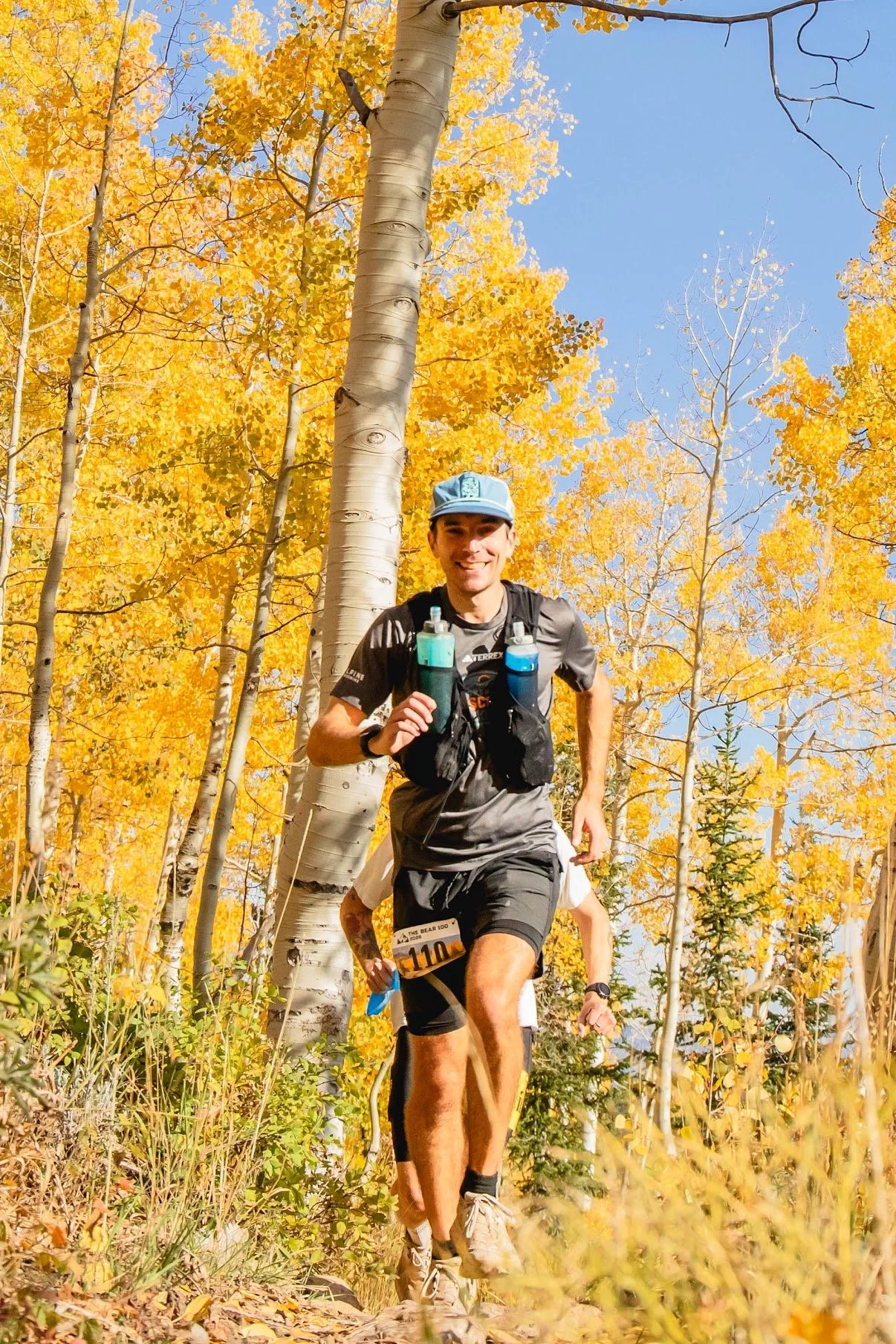
The Bear 100 - September 2026
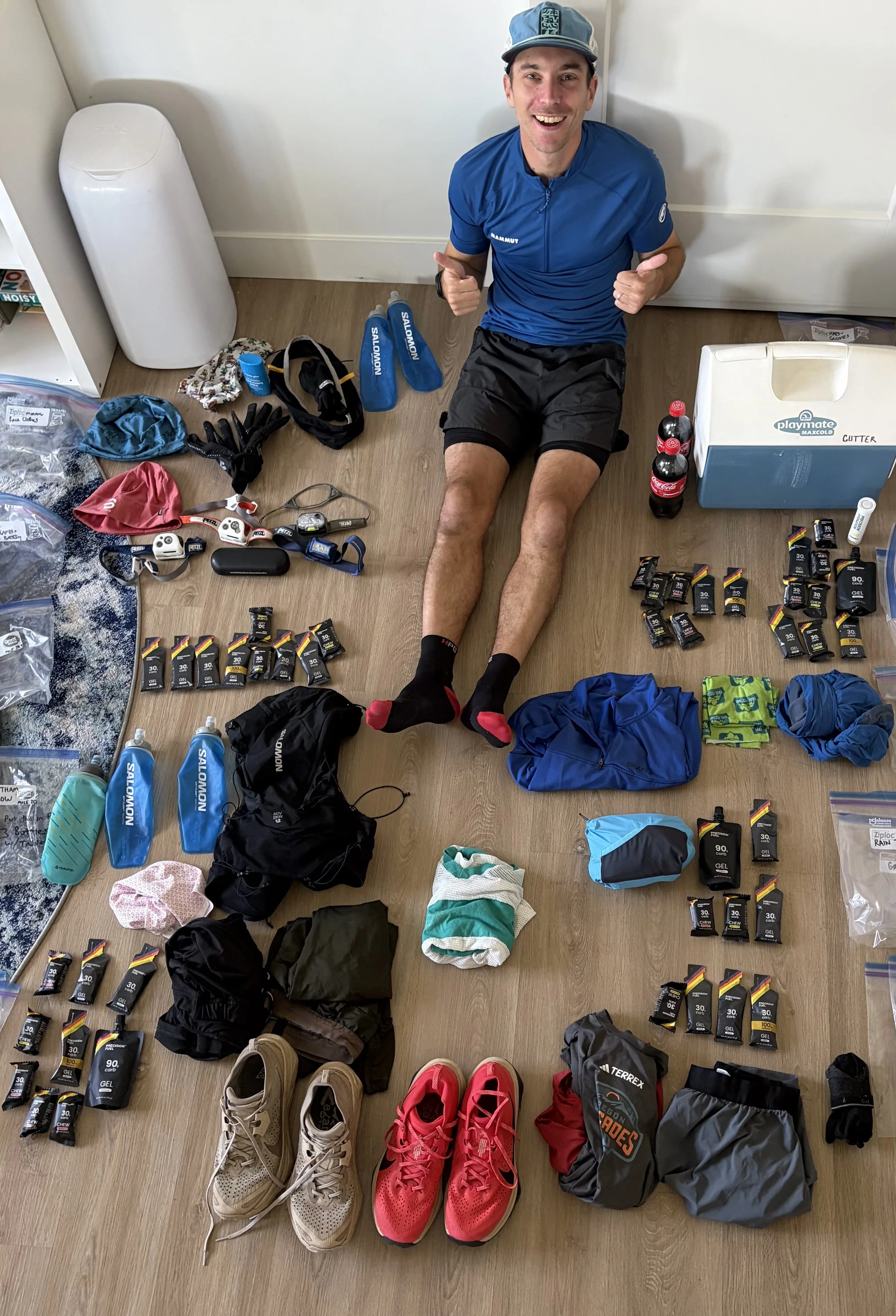
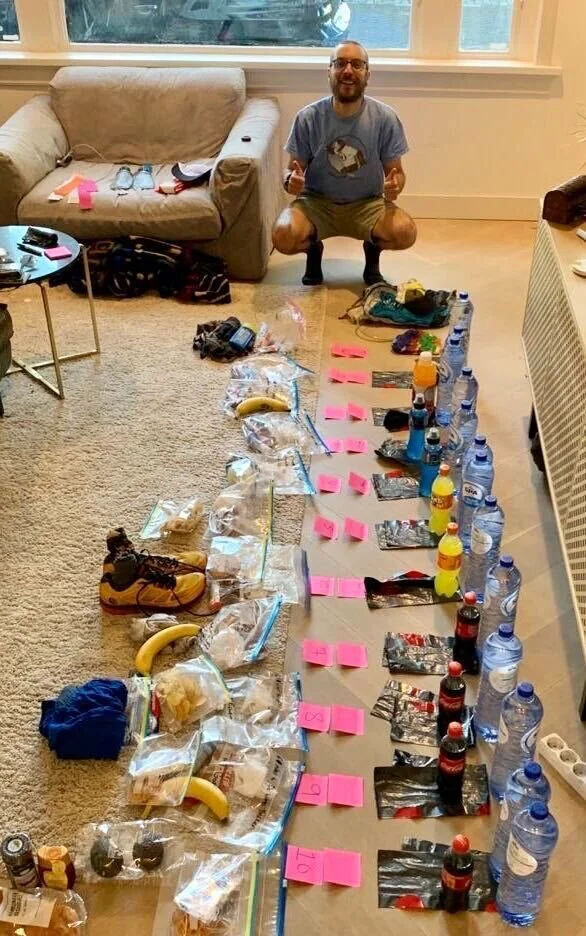
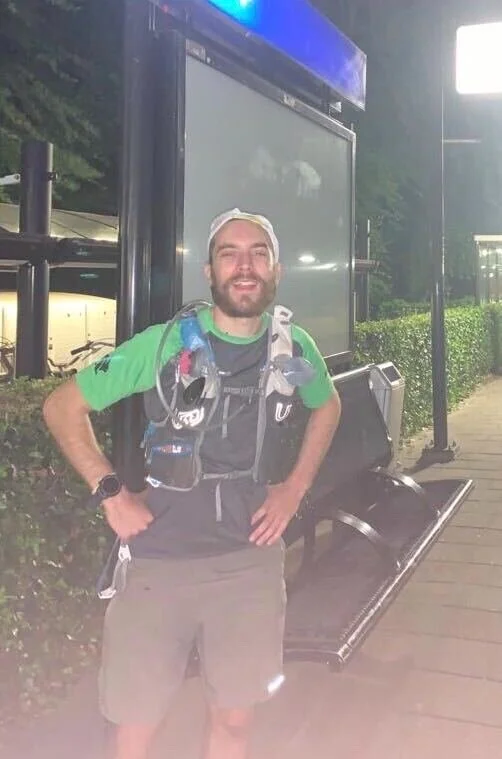
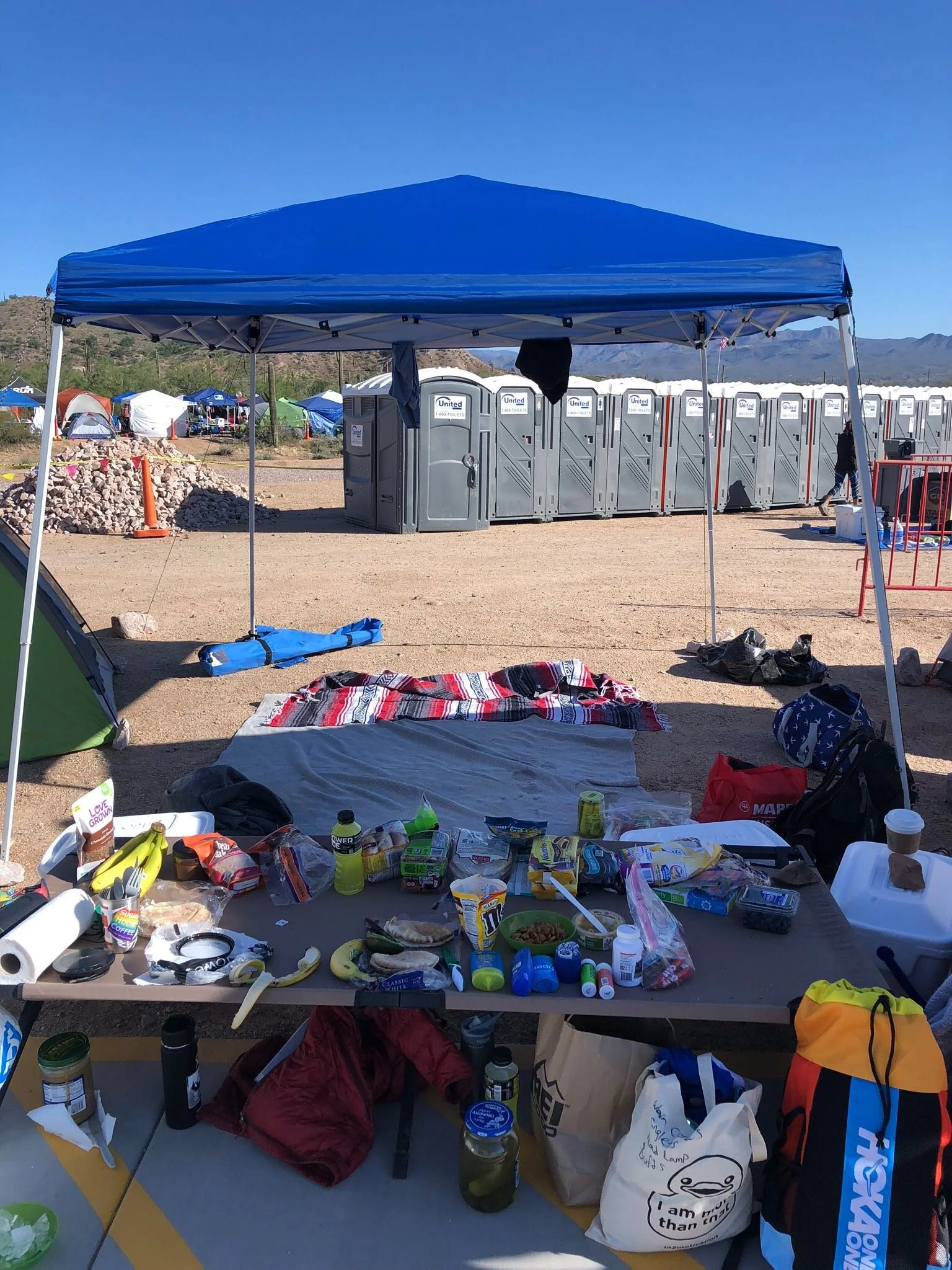
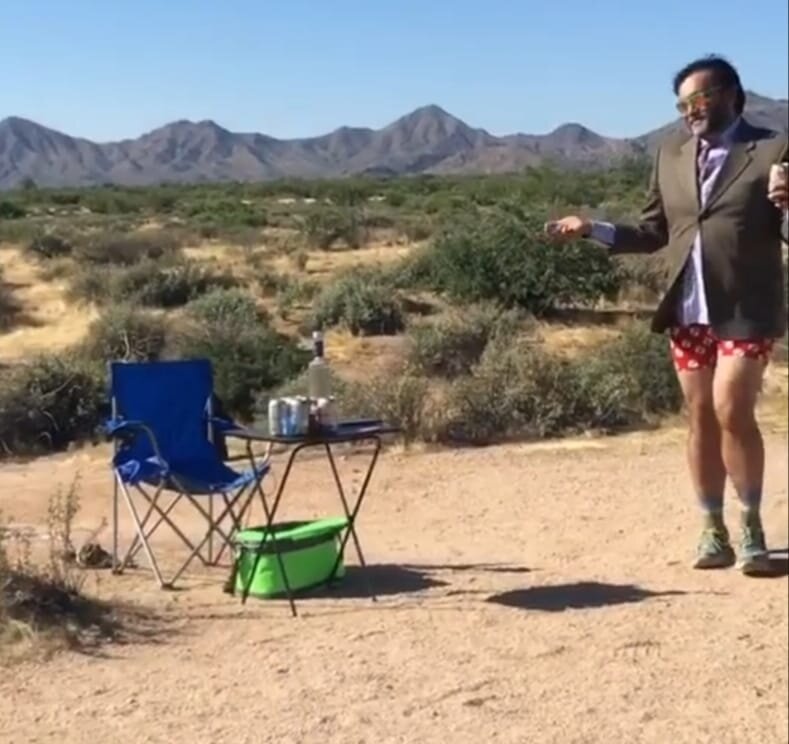
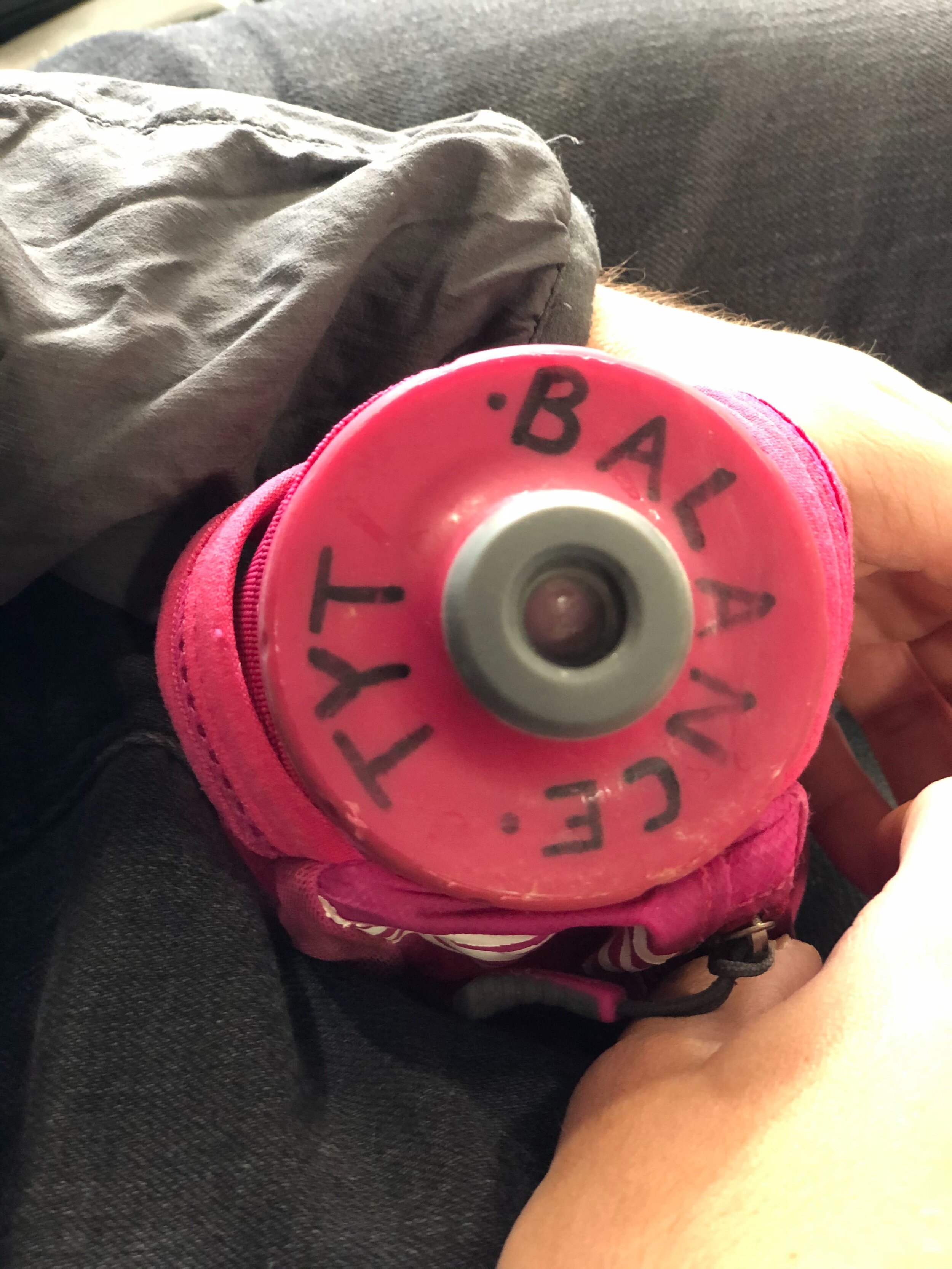
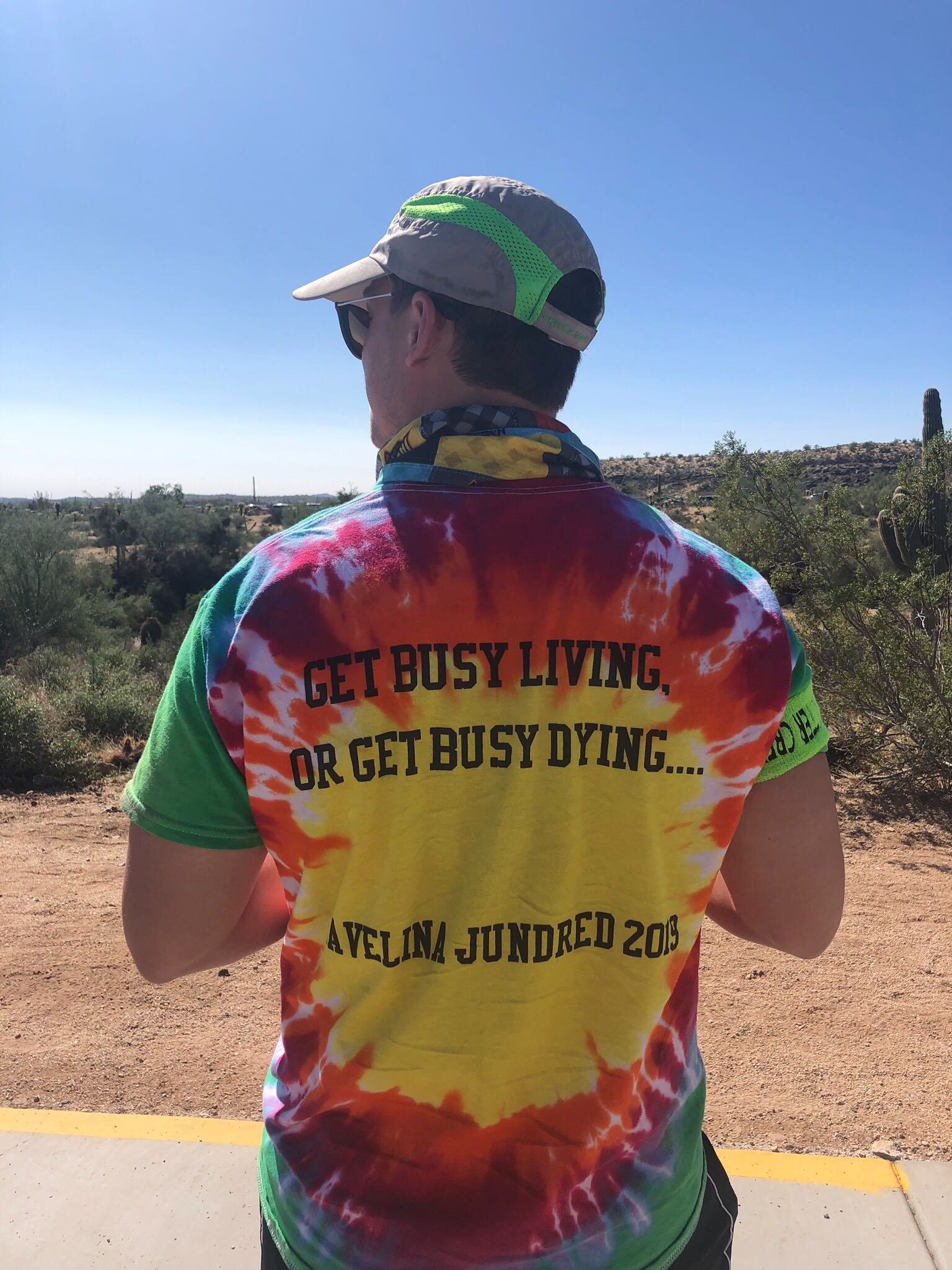
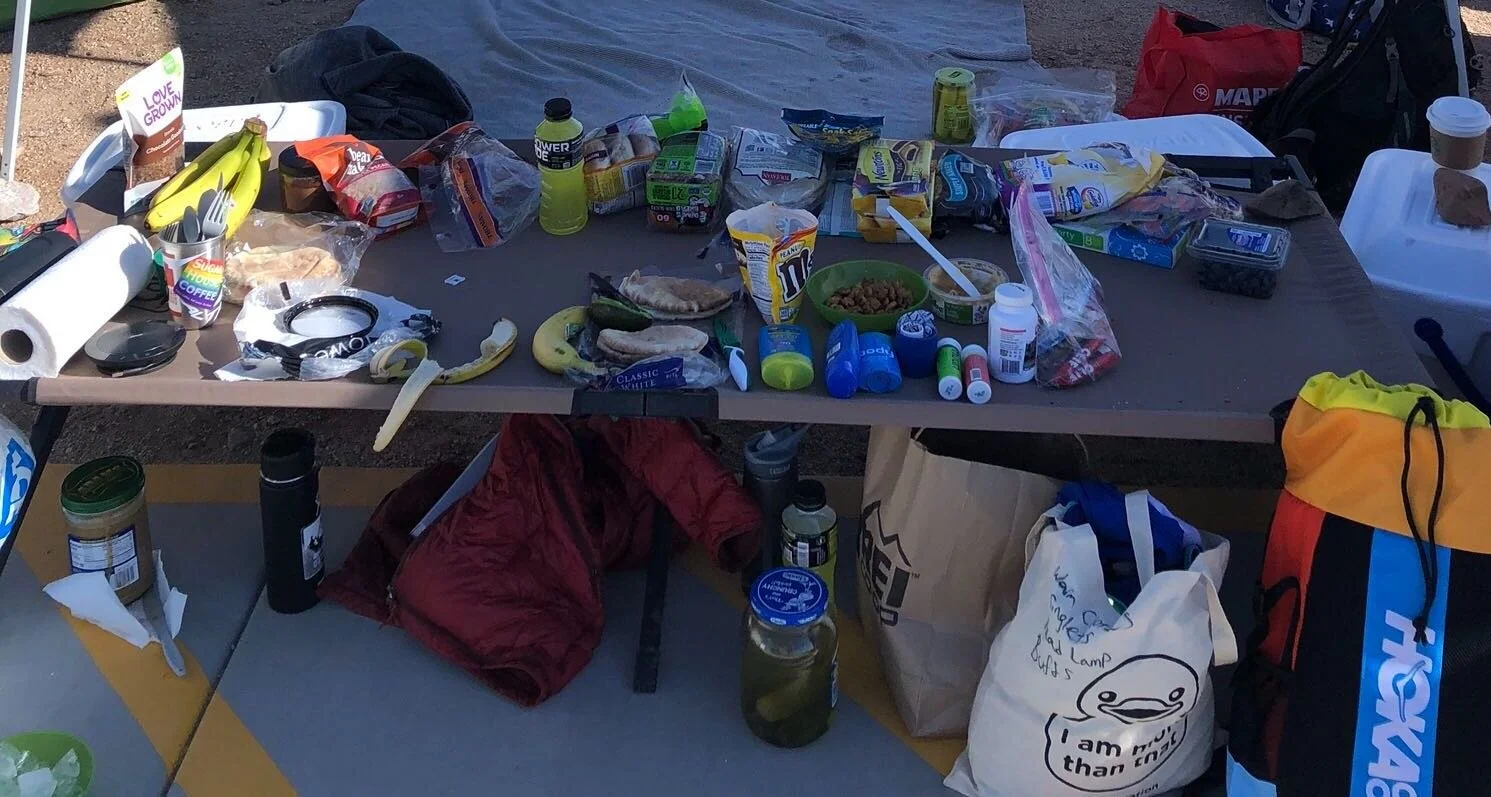
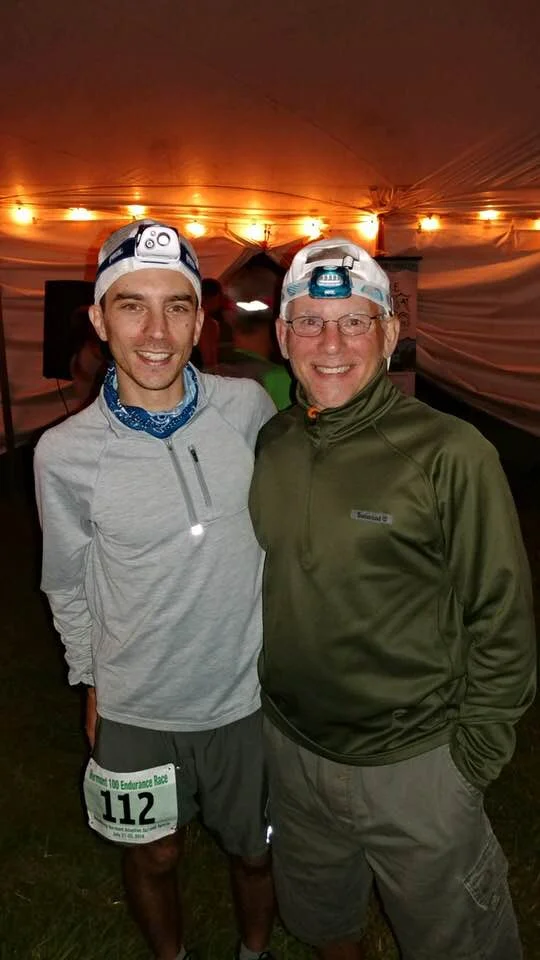
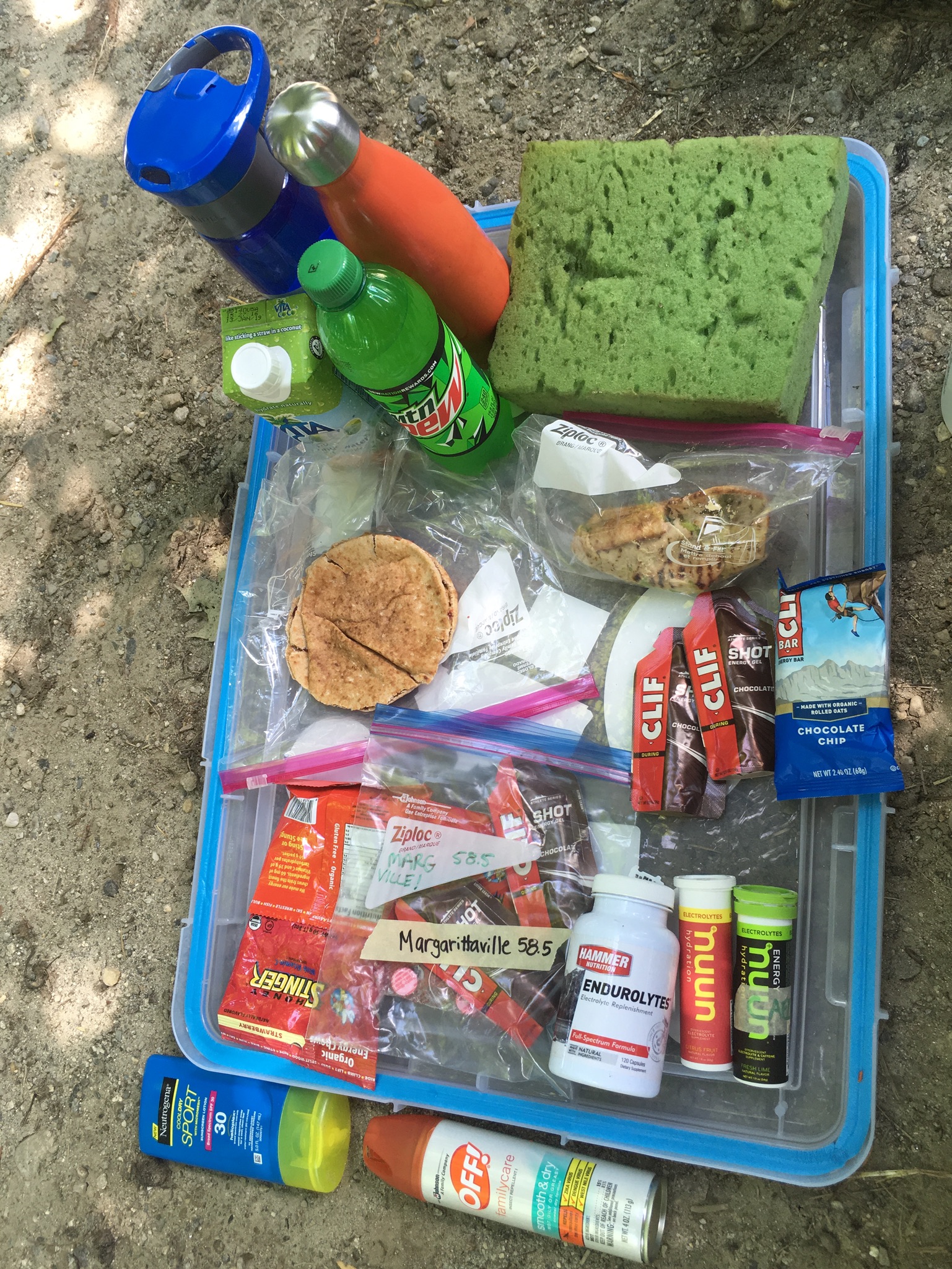
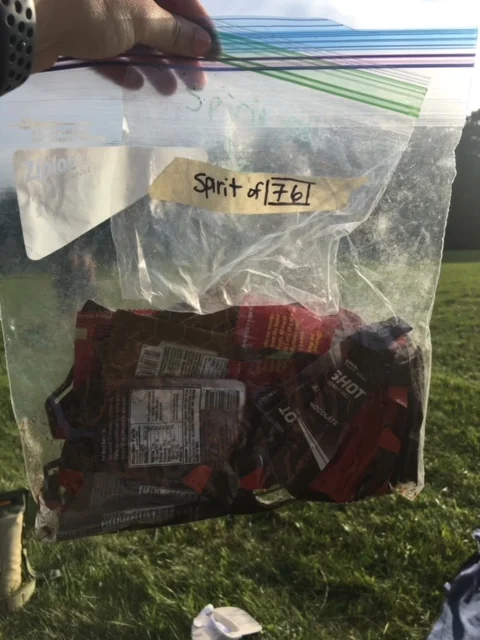
Pre-race gear prep. Ready to rock.
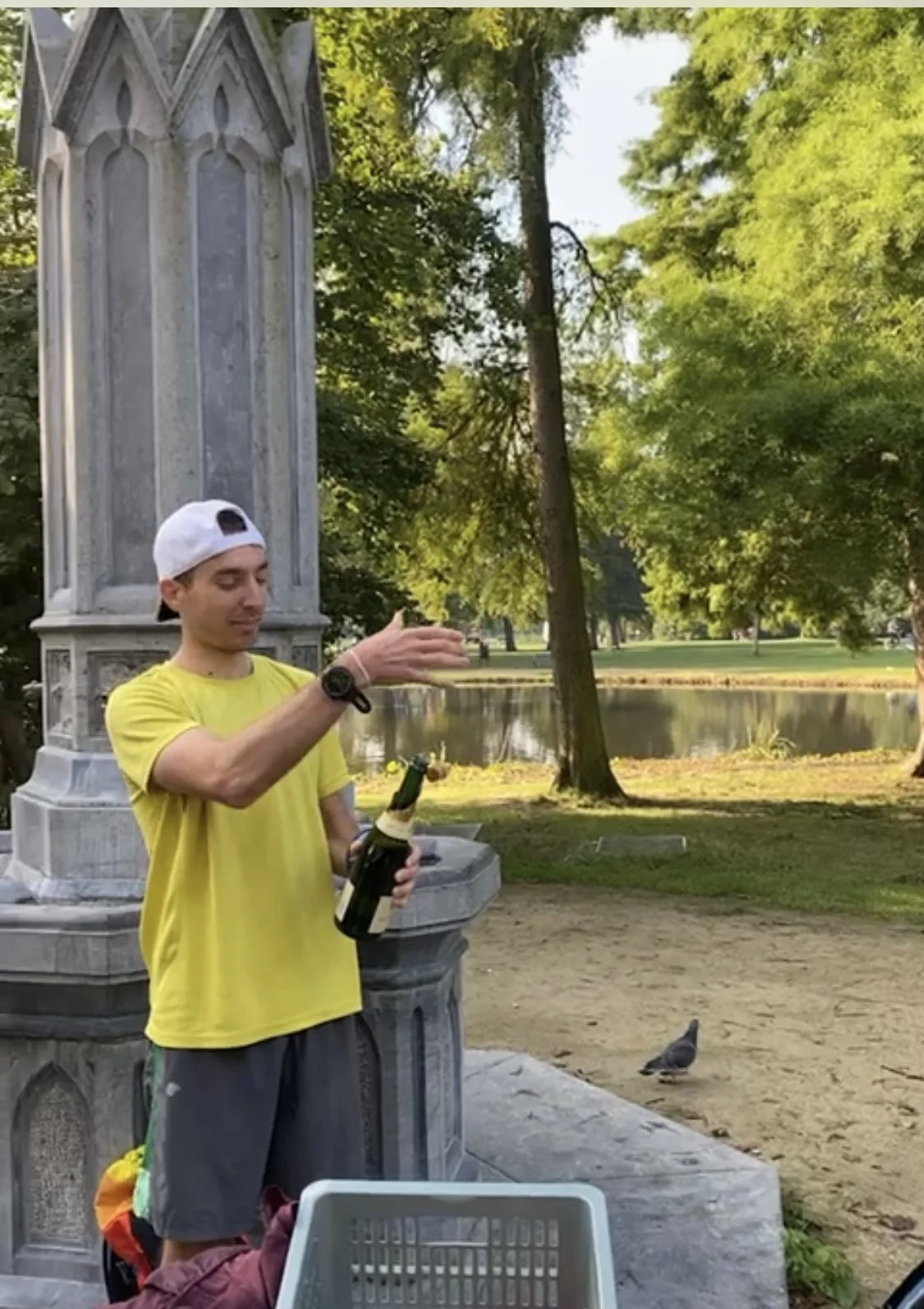
"Pretty tactical, ain't it?"
Those were the first words I said to Ben when I rolled into Tony Grove at mile 52. I had arrived at the exact minute I'd written down weeks earlier. Fifty-two miles of mountains, and I hit it to the minute.
50 miles had gone to plan. But, it 100 milers, it’s never guaranteed. I wasn’t sure how the second half would go…
The Course
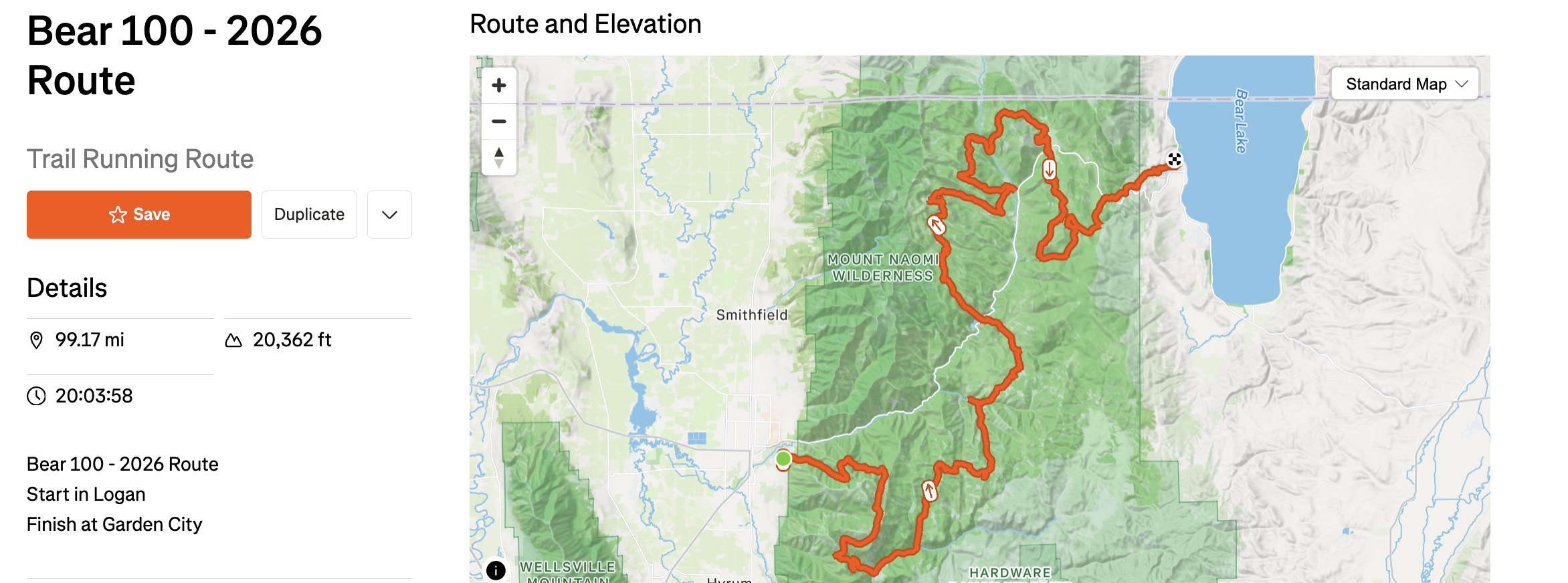
The Bear 100 has been running since 1999. It's a point-to-point route from Logan, Utah, to the shores of Bear Lake in Garden City, UT.
Distance: 100 miles
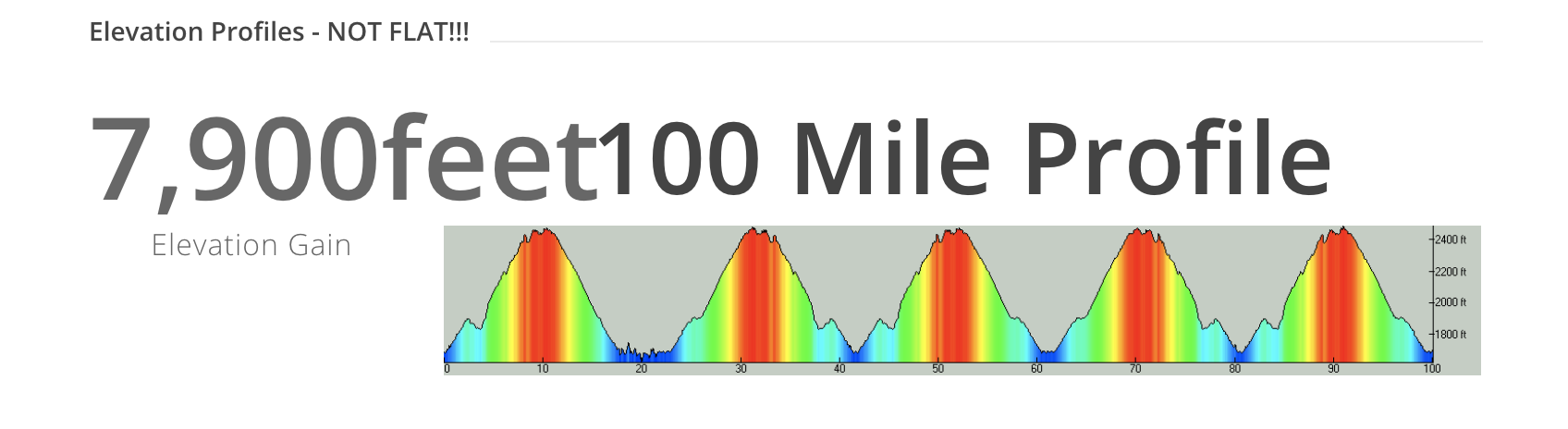
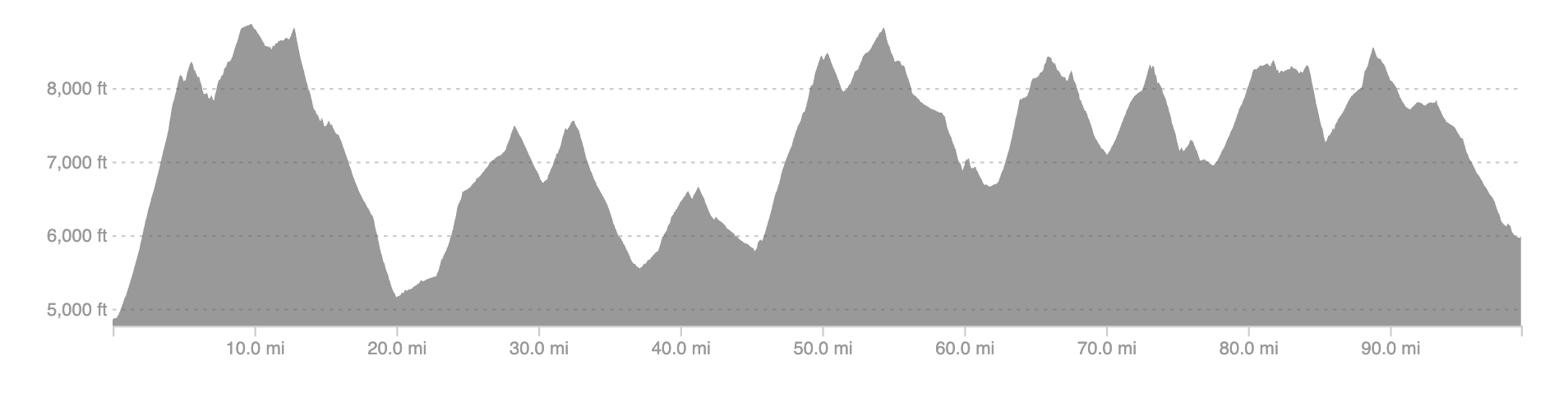
Elevation gain: 20,321 ft
Elevation range: 4,853 ft to 8,865 ft
Terrain: Mostly mountain singletrack, with stretches of dirt road through aspen and maple forest
Cutoff: 36 hours
Some 100s are known for altitude, some for heat, some for one monster climb. The Bear is known for relentlessness. It's widely considered one of the more rugged, difficult 100s out there. There's no single feature that breaks you. It's the steady grind of climb after climb, ridge after ridge, followed by a long, cold night up high. The terrain is rocky, with plenty of "bear's teeth" to catch tired feet, and the weather can swing from a warm afternoon to below freezing overnight.
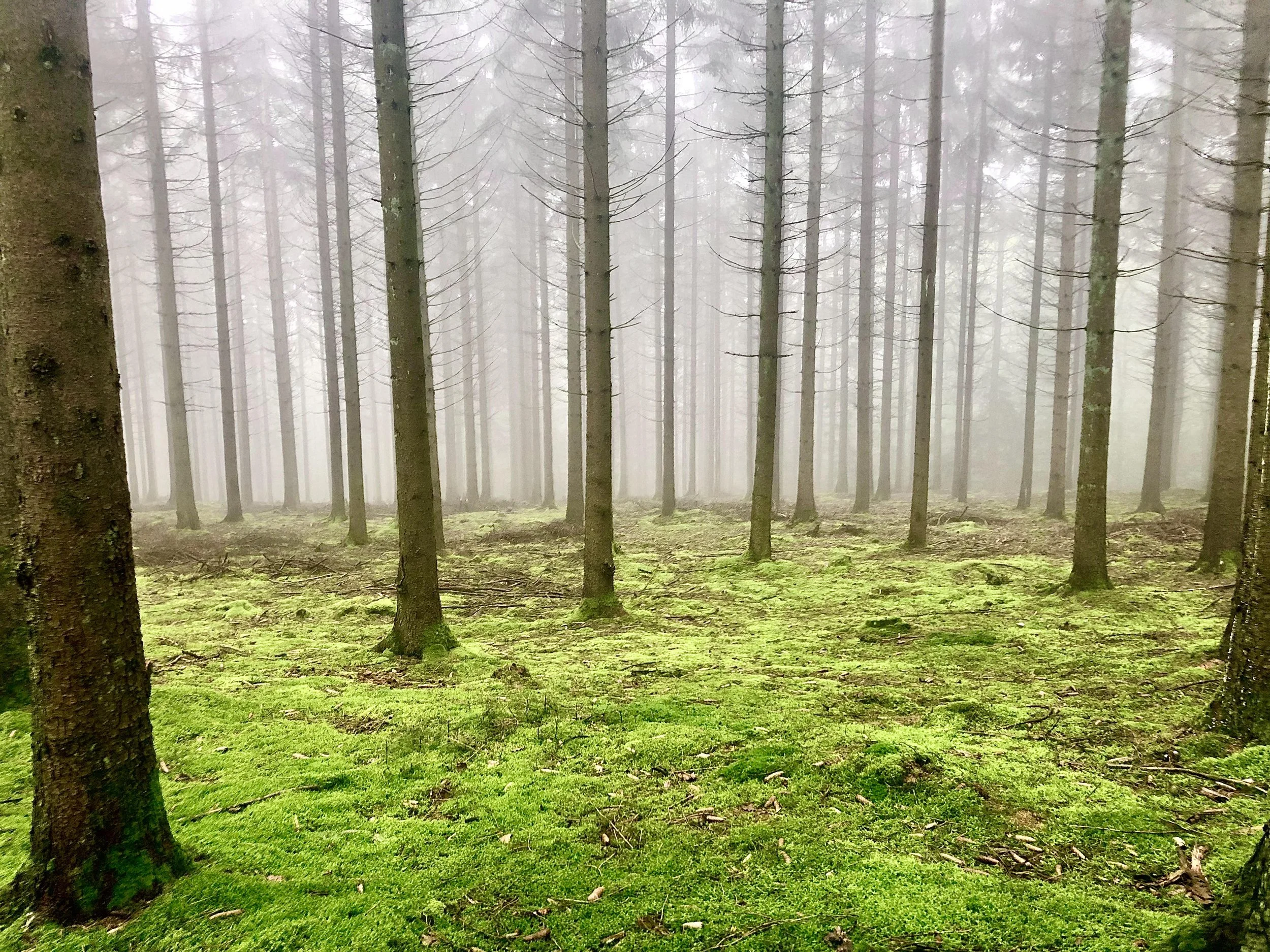
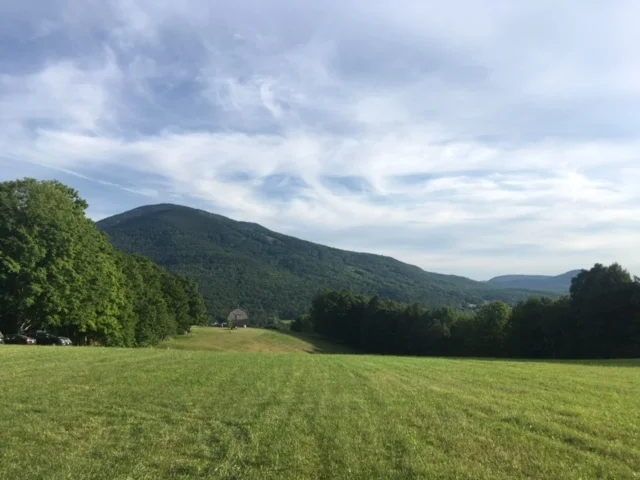
It's also one of the most beautiful races I've ever run. The Bear is held in late September, right when the fall colors hit their peak. You run for hours through golden aspens and bright red maples. When your stomach is falling apart at mile 70, that doesn't hurt (as much).
Roughly, the course breaks into four parts:
The Logan climb. The race opens with the longest climb of the day, straight out of Logan and up toward Logan Peak. It sets the tone early.
Ridges and canyons to Tony Grove (mile ~52). A long stretch of climbing, descending, and repeating as the course winds through the canyons of the Bear River Range.
The high country (Franklin Basin to Beaver Mountain, mile ~78). Night falls, the temperature drops, and the course pushes deeper into the mountains.
Peter Sinks to the finish. Freezing cold, dark, high-country miles, one last brutal climb, and finally the long descent to Bear Lake.
Training
With our family growing, I hadn't done a 100 mile race in a few years. That gap was a big part of why I committed so fully to this one.
The build was about six months long. At its peak I was training close to 16 hours a week. That came to roughly 75 miles and 10,000 - 12,000 feet of vertical gain each week. The Bear is a mountain race, and I wanted my legs to feel like the climbs + descents were normal and not something to fear. Still…it’s hard not to compare yourself to many other others who were consistently training 100, or 120+ miles and 20,000+ feet of gain for this race. I was nowhere near that.
But a big thanks to Scott Traer, coach at RunFastah, for helping me prepare…and reminding me that I was plenty fit heading into the race.
This training block also made me realize, as I’m getting older, that training time is not the limiting factor, but what the body physically allows without injury. You can, contrary to common belief, create time! Need to train more? Get up earlier; put on the headlamp. If something is important to you, you find the time.
But, at some point, the body will revolt, and something will breakdown. This is a tricky balance as I get older.
The Ankle
Three weeks before race day, my ankle started to hurt.
Three weeks is a terrible time for that. It's too late to change your training and too soon to stop worrying. I saw a podiatrist, who diagnosed an AITFL (anterior inferior tibiofibular ligament) sprain and gave me a cortisone shot. I responded well to it and the pain faded quickly. Still, the ankle never felt quite right. It wasn't painful. It just felt delicate, and I wasn’t sure how it’d hold up over 100 miles.
That ankle became my biggest worry and took up most of the space in my head before the race. I made a deal with myself: just get to mile 10. If I could get through the first 10 miles on an ankle that wasn't screaming, I'd be in a good spot. Then I could get the race done.
The funny part is what happened at mile 10. The ankle was fine, but I didn't feel relieved. My thought wasn't "we're good." It was "there are still 90 miles to go." All that energy spent on the ankle, and when it finally stopped mattering, the size of the task in front of me took its place. The worry doesn't go away. It just finds something new.
The Plan
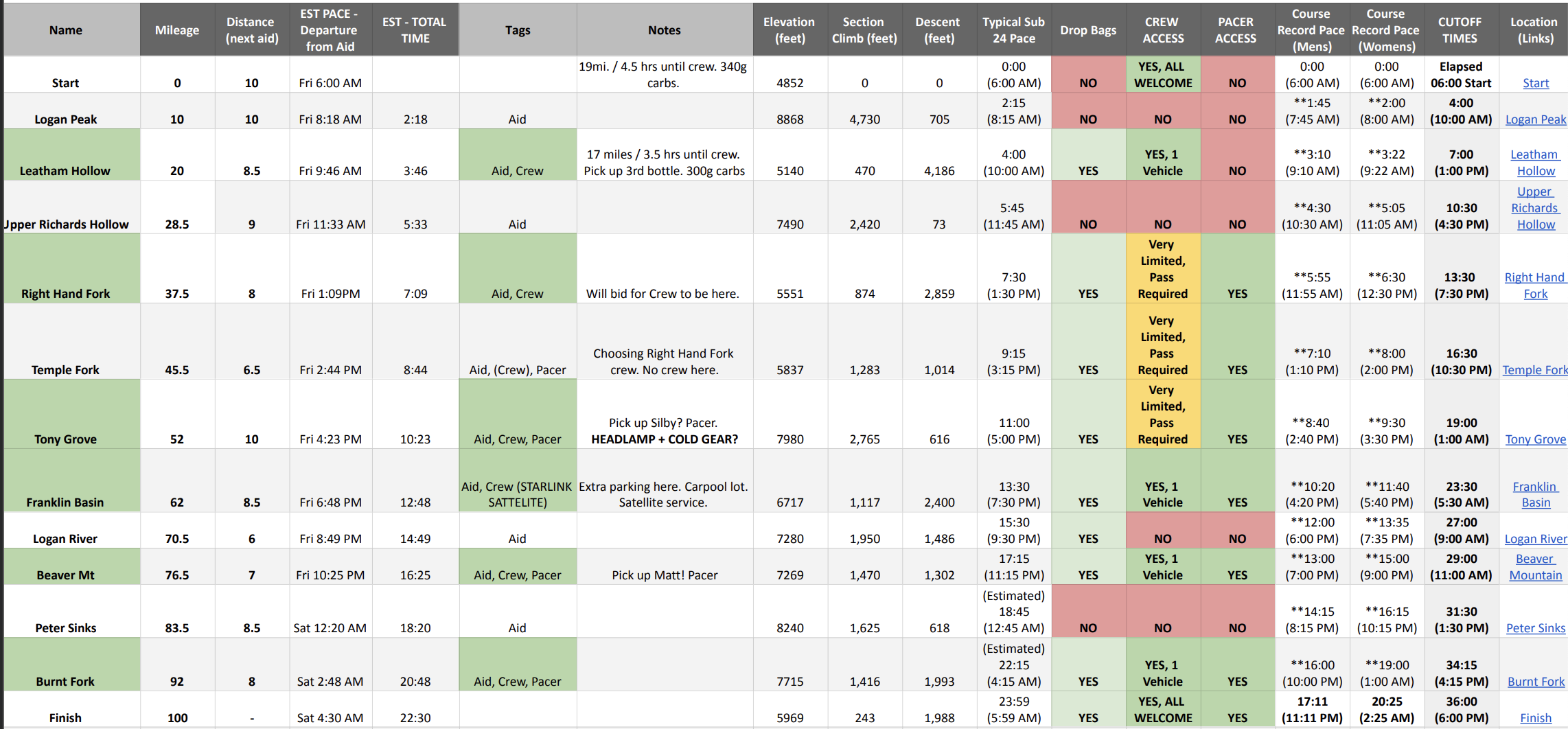
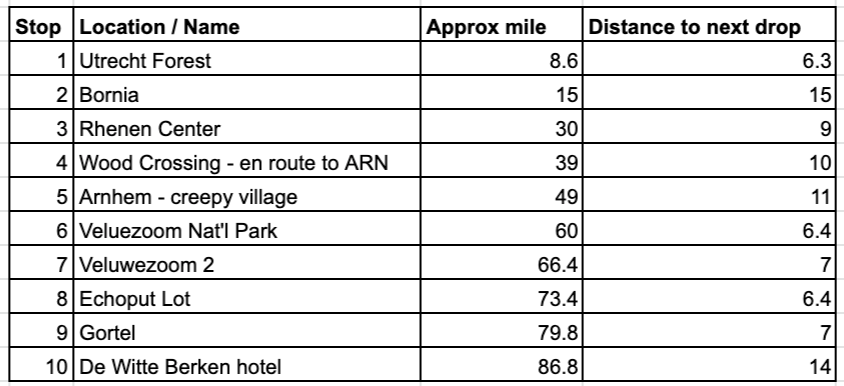
My pacing spreadsheet that I made with a combination of ultrapacer.com, race info, and some manually inputted data.
The splits I wrote down added up to 22 hours and 30 minutes. This would be the slowest hundred finish for me, but probably the most difficult course. From past results, I knew roughly the top 20 finishers would run under 24 hours. I wanted to be in a position to compete over the last quarter of the race without spending myself in the first half.
The Mental Strategy
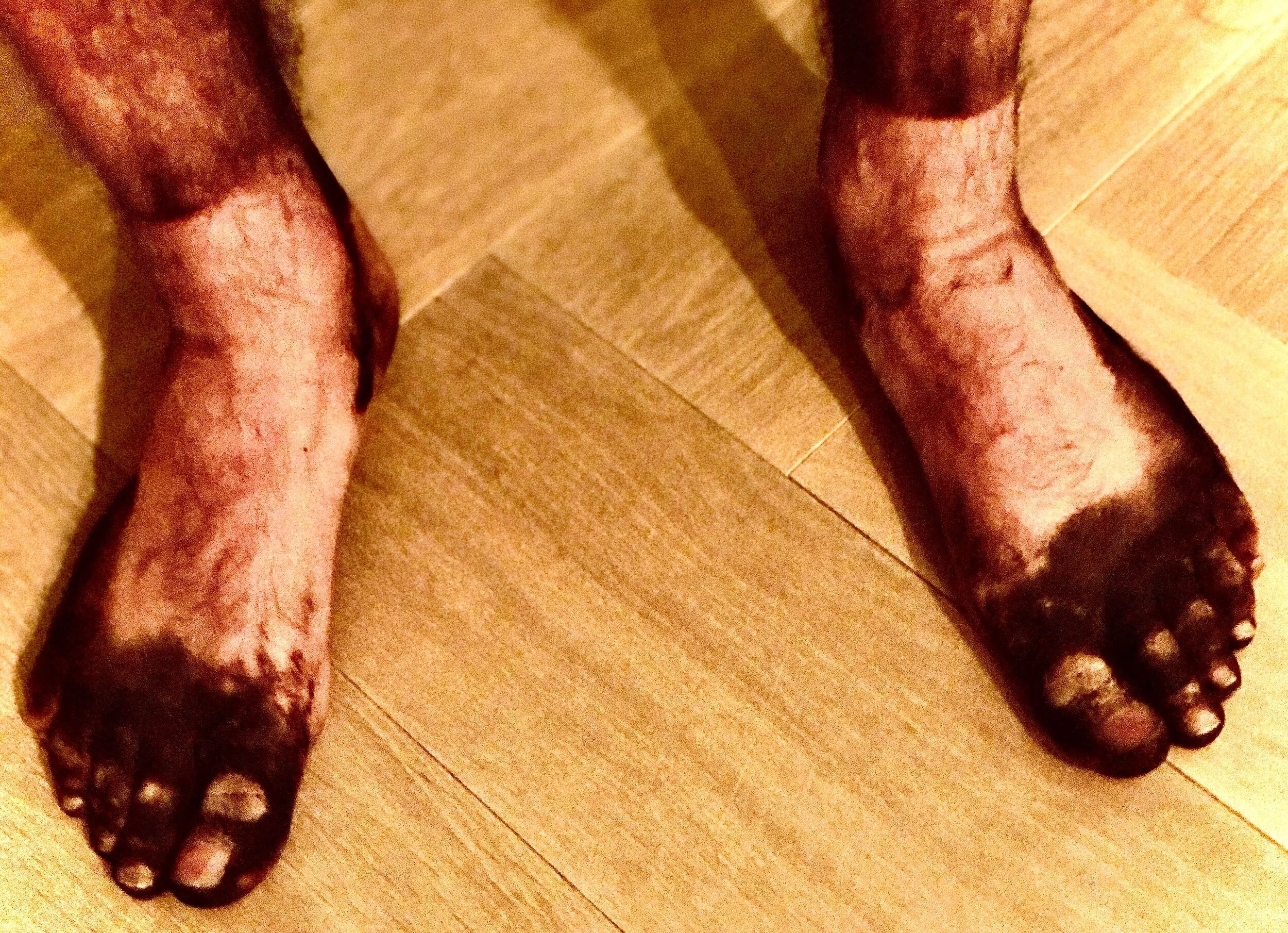
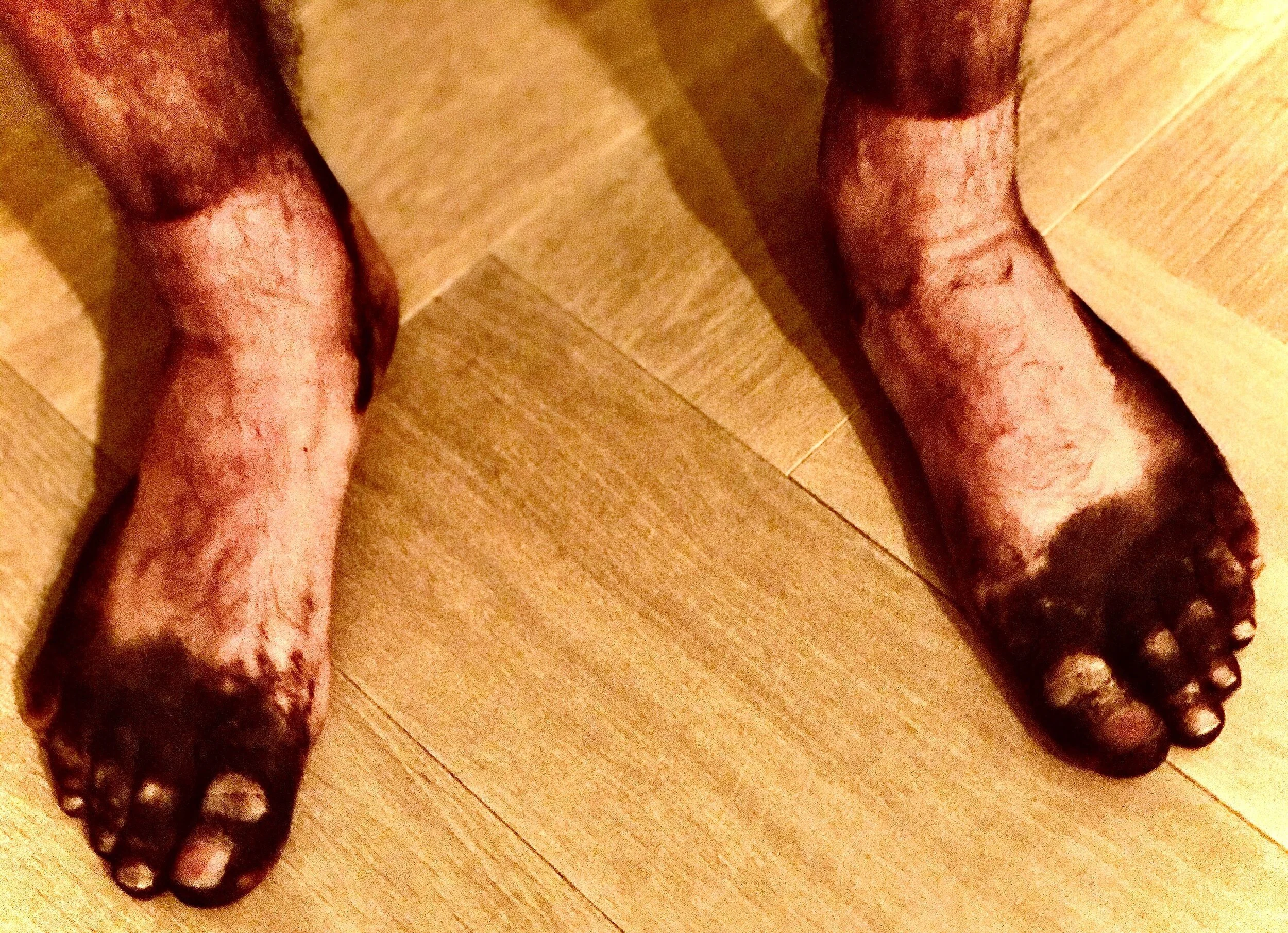
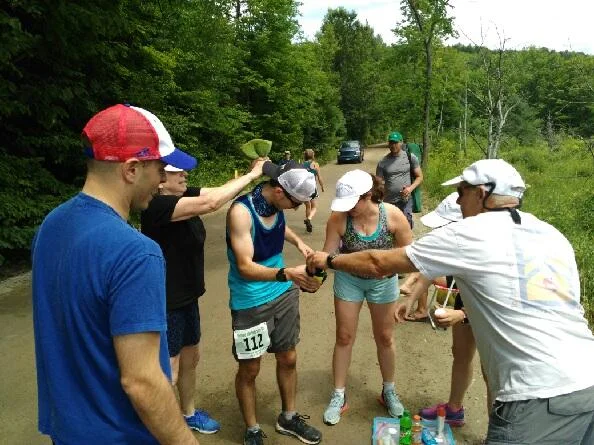
Before every 100 miler I've run, I write mantras on my hands in permanent sharpie. It sounds small, but at mile 80, you may need a reminder. You just look down and your own handwriting tells you what to do.
This time I wrote three, one for each part of the race:
KISS Keep It Smooth, Stupid. And, doubling up, Keep It Simple, Stupid. This one covered the first third. Stay controlled. Stay content. Don't do anything outside of your capabilities.
BYC Because You Can. Gratitude is a highly important practice. I do this because I can, and many other’s cannot.
FWP Find What's Possible. This one turned out to matter more than I expected. More on that later.
Miles 0–52: Keep It Smooth, Stupid
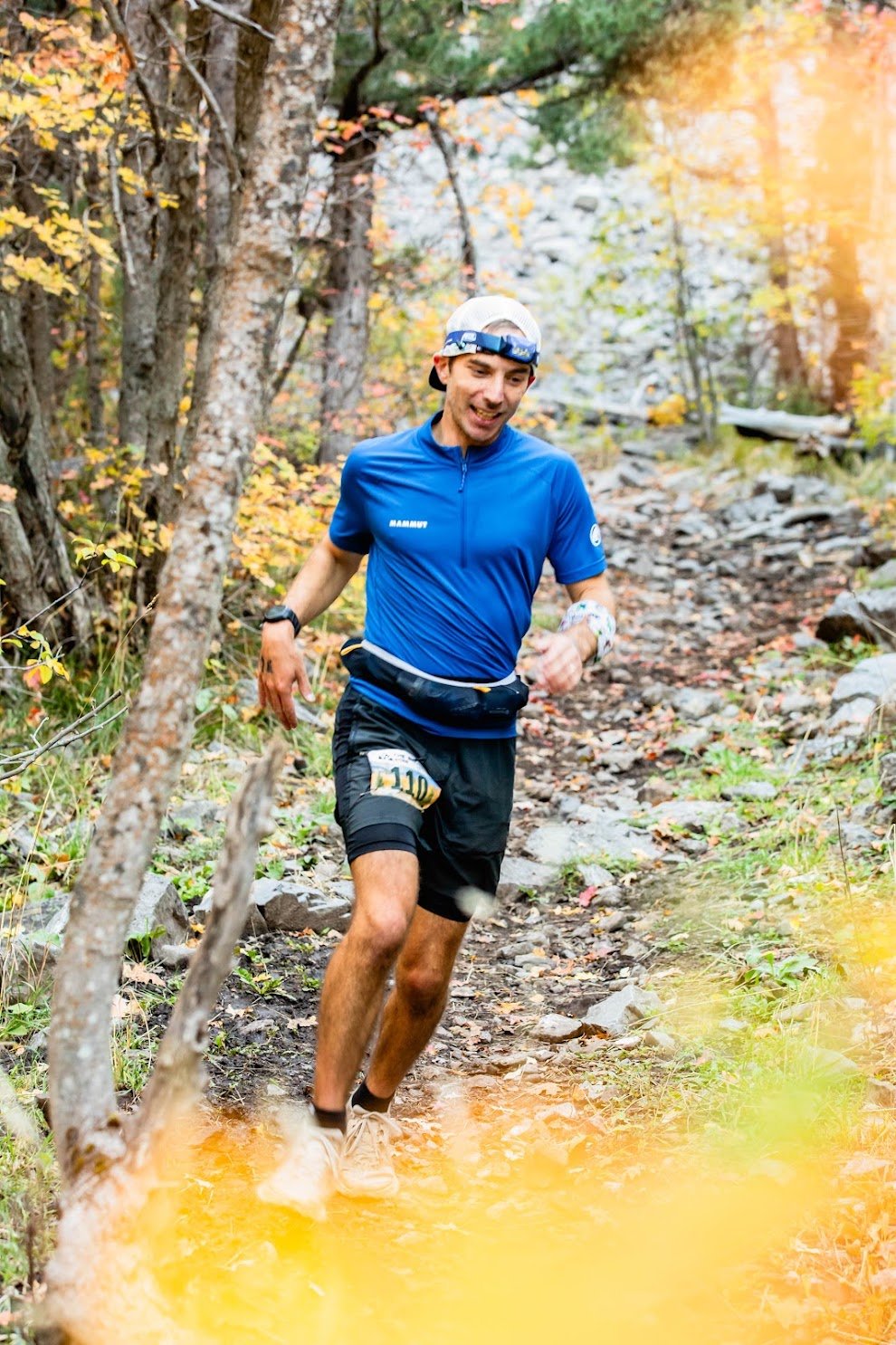
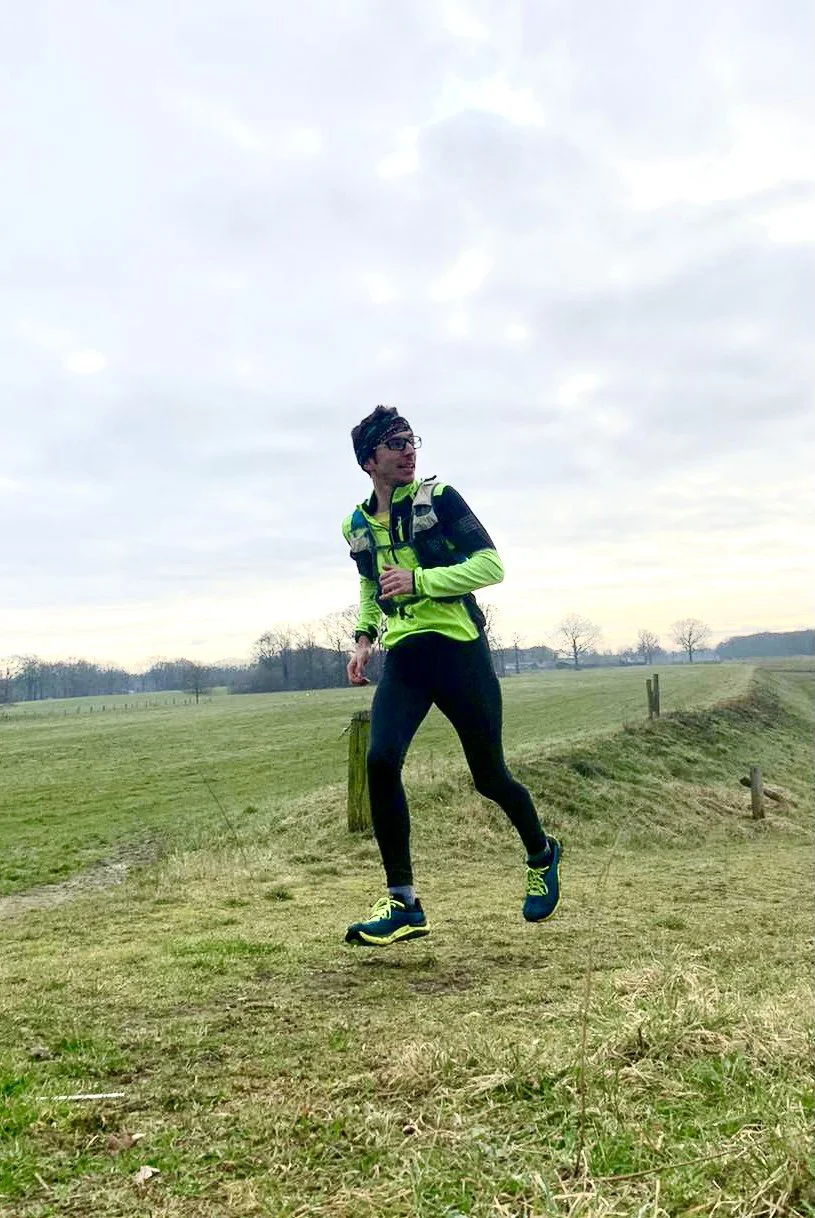
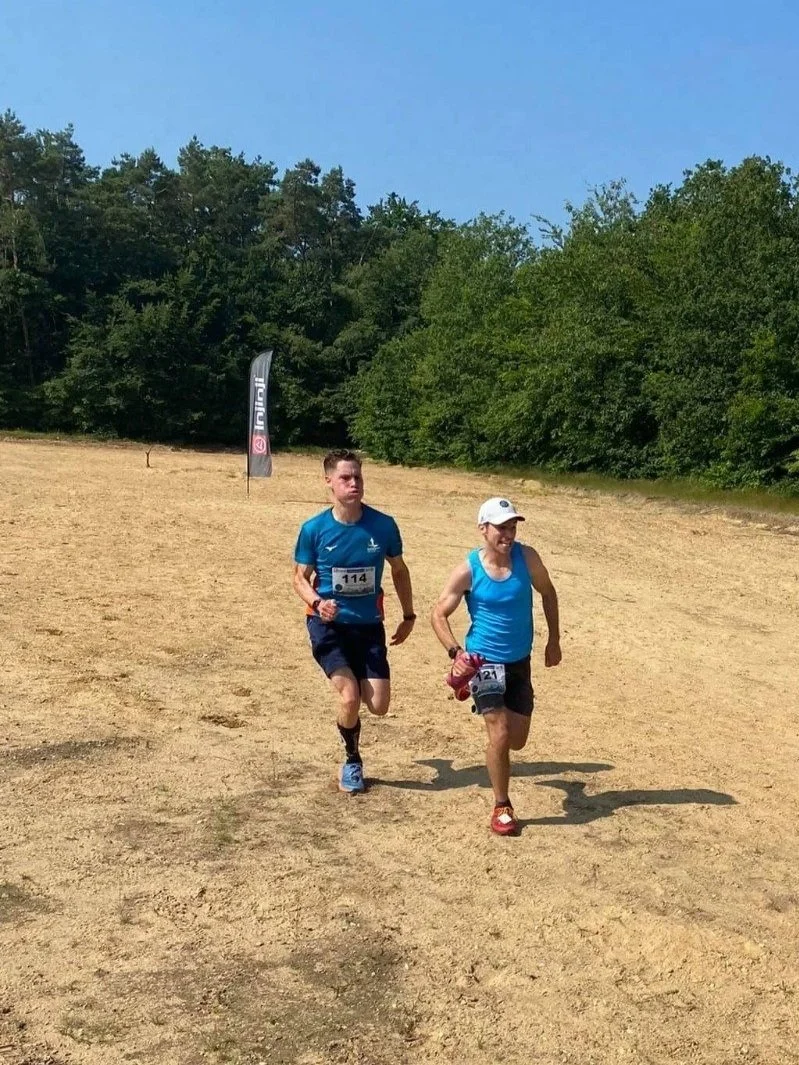
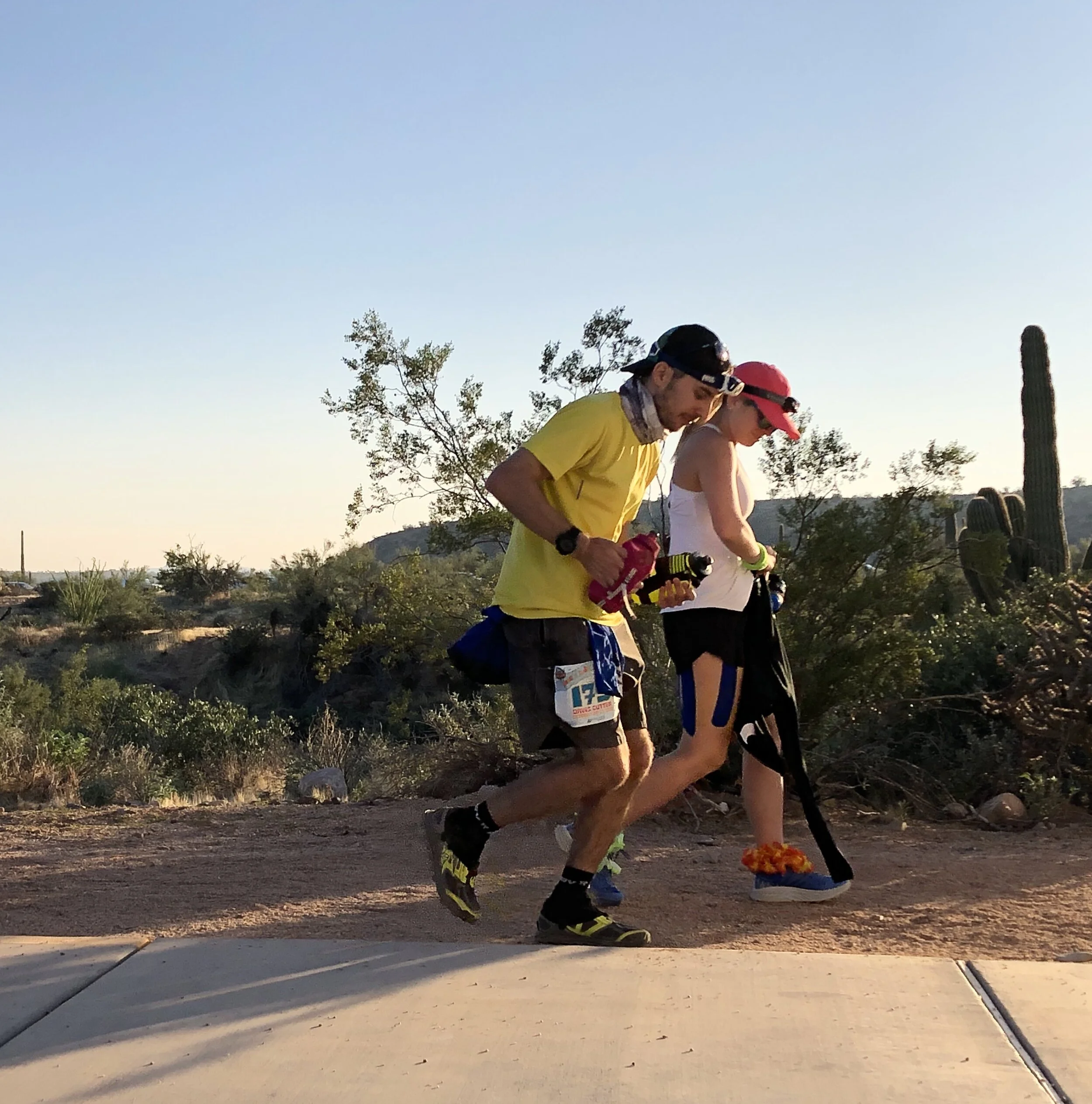
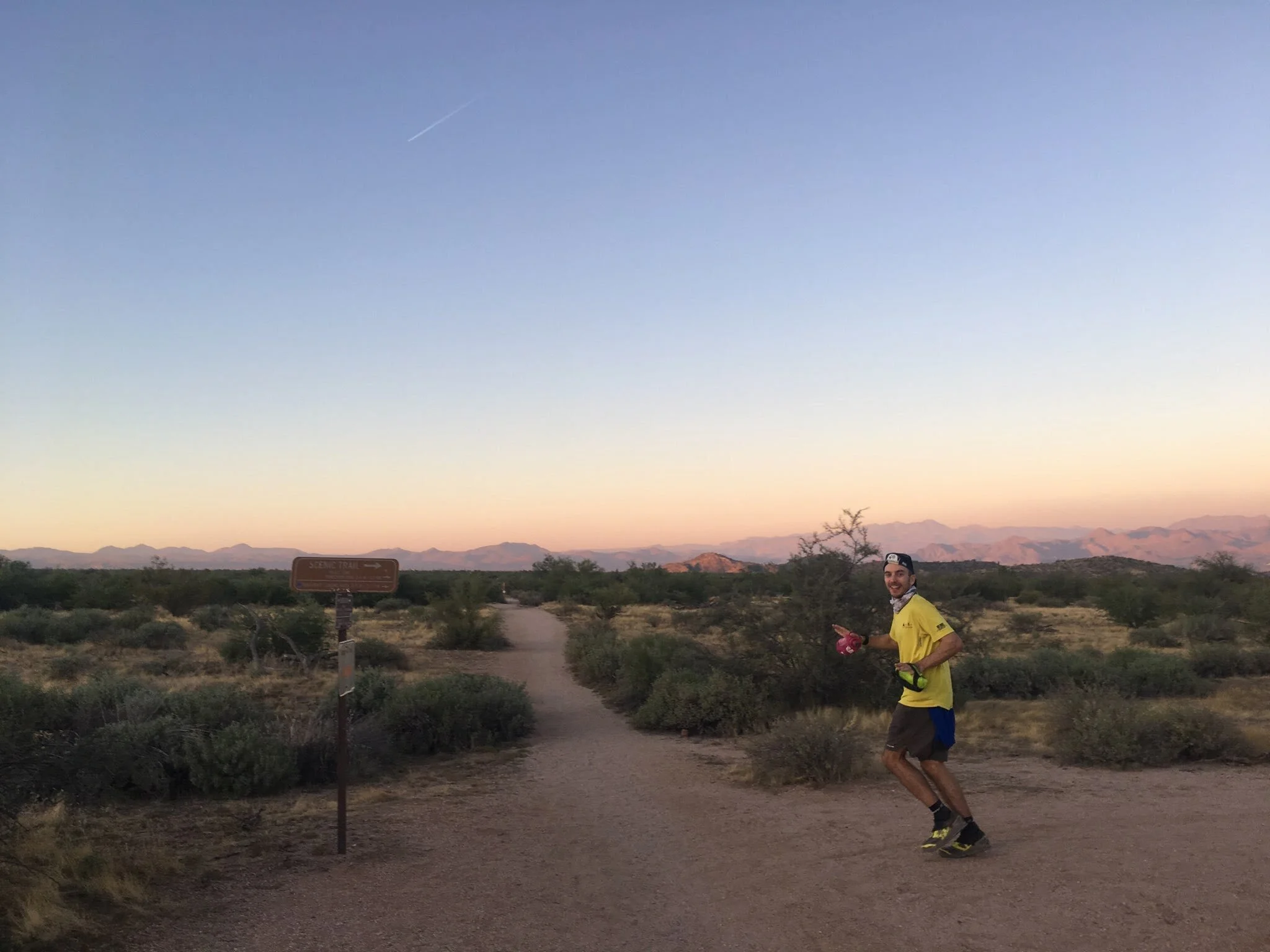
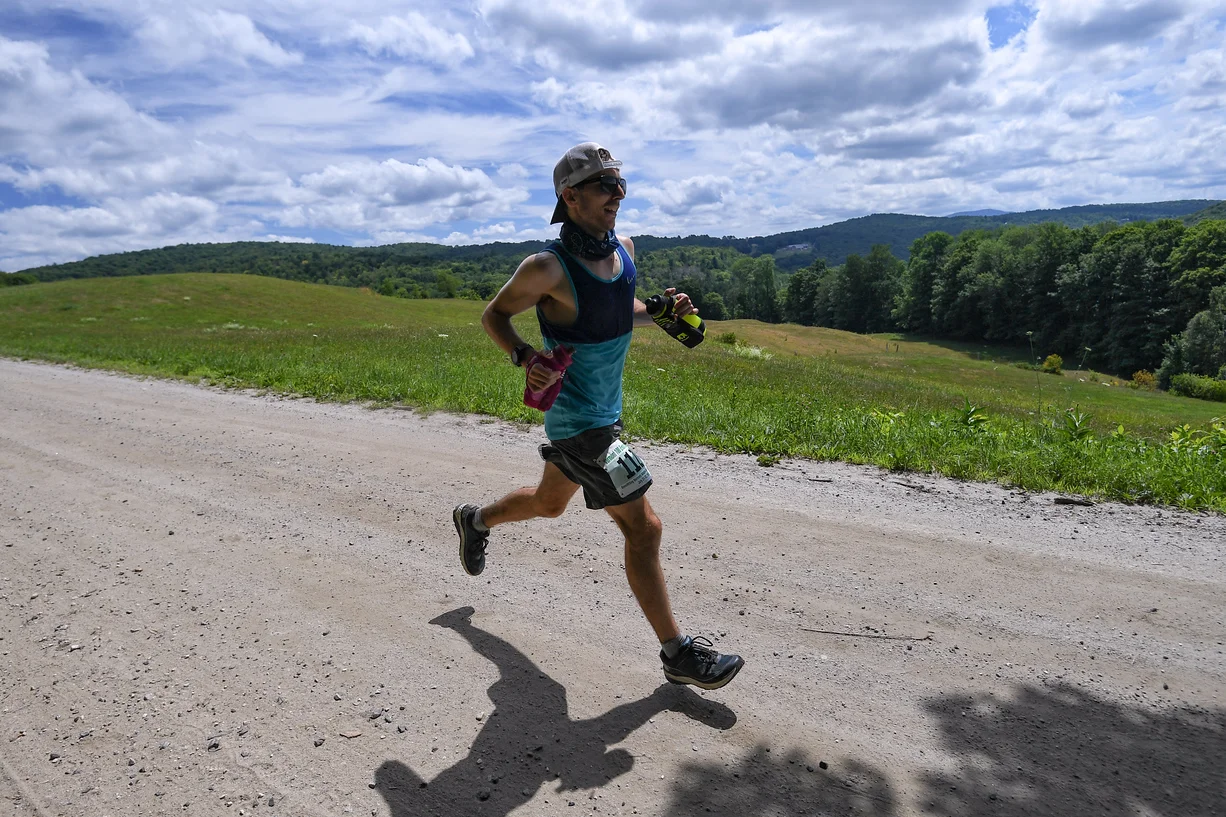
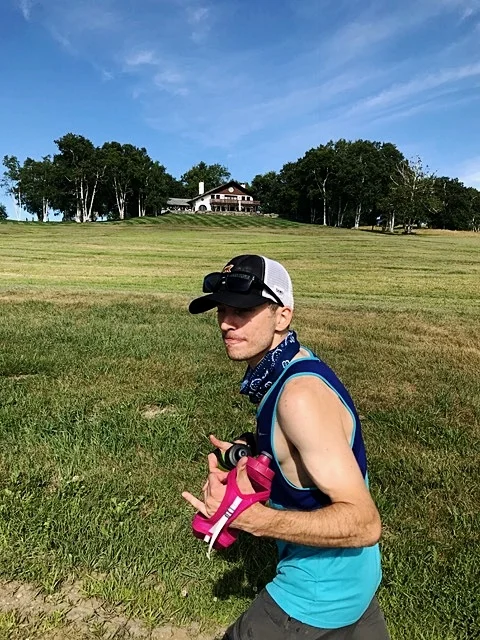
Keeping it smooth at mile 20. Things felt very comfortable the first half of the race.
Photo Bethany Draper
Early on I sat around 30th place, which was exactly where I wanted to be.
This part of the race is about holding back. Your legs are fresh, the adrenaline is high, and every instinct says to go. Keep it smooth. Keep it simple. Eat, drink, move, repeat.
My crew was outstanding all day. I don't think I spent more than about three minutes in any aid station — which I think was one of (perhaps the) least amount of time spent in aid all day. My mom and dad, Lucy, and Kylie were all there. Kylie was celebrating her second birthday that day. I'm sure spending it in the mountains cheering for Dada was exactly what she had in mind.
Then came Tony Grove. Mile 52. Right on the minute.
"Pretty tactical, ain't it?"
And we were off.
Miles 52–78: Enter Ben
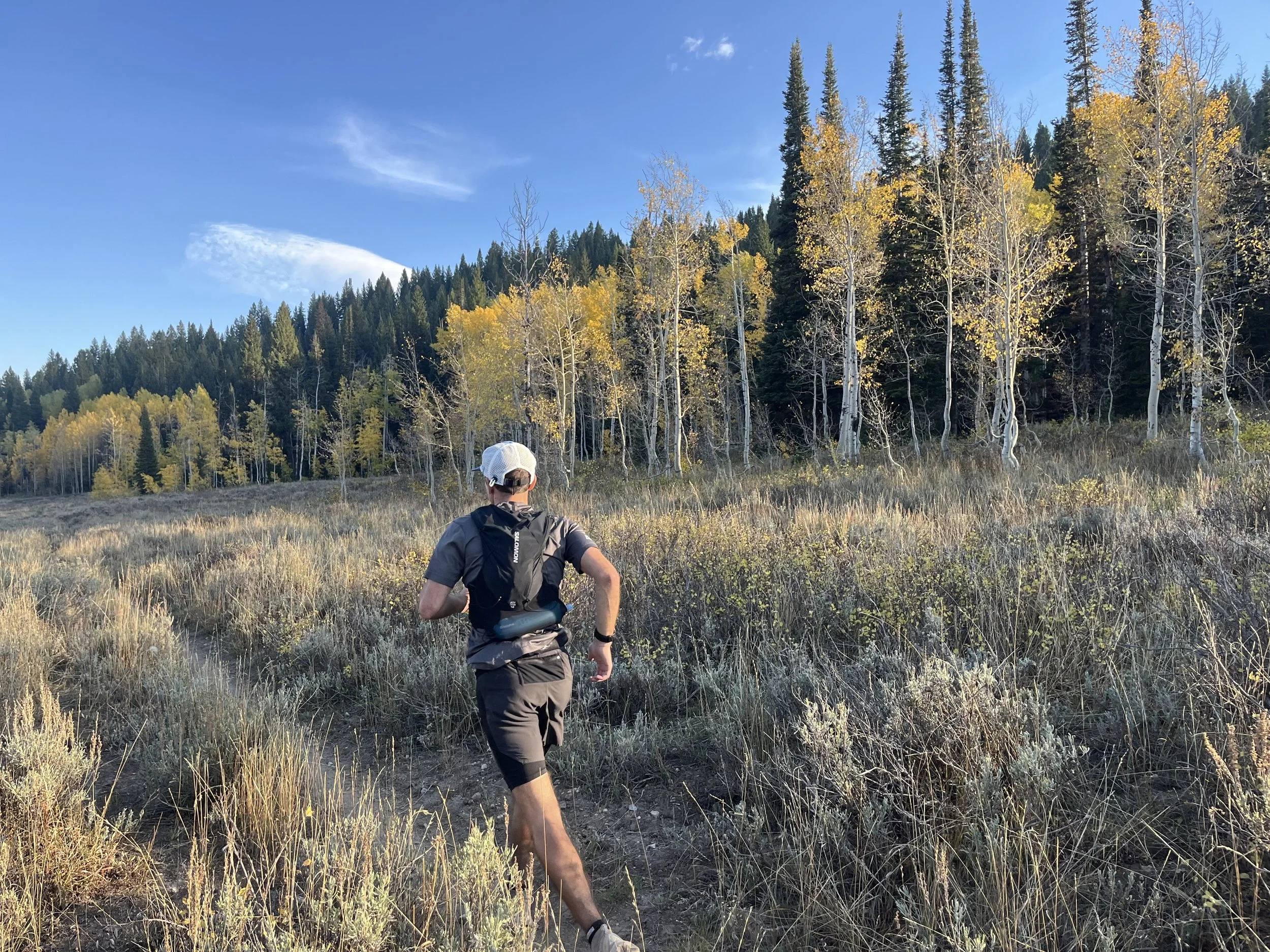
Picking up Ben felt fitting. Last year I paced him through the final 22 miles of his race, and now he was returning the favor. Ben and I have had plenty of adventures together over the years, and this section felt like another epic one. We moved well. It was strong running, good conversation, and everything was working.
My ankle was there, it was painful, and the pain was slowly increasing, but wasn’t enough to slow me down. It was holding together. Eventually, the pain just blended into numbness with the rest of the fatigue in my quads, knees and toes.
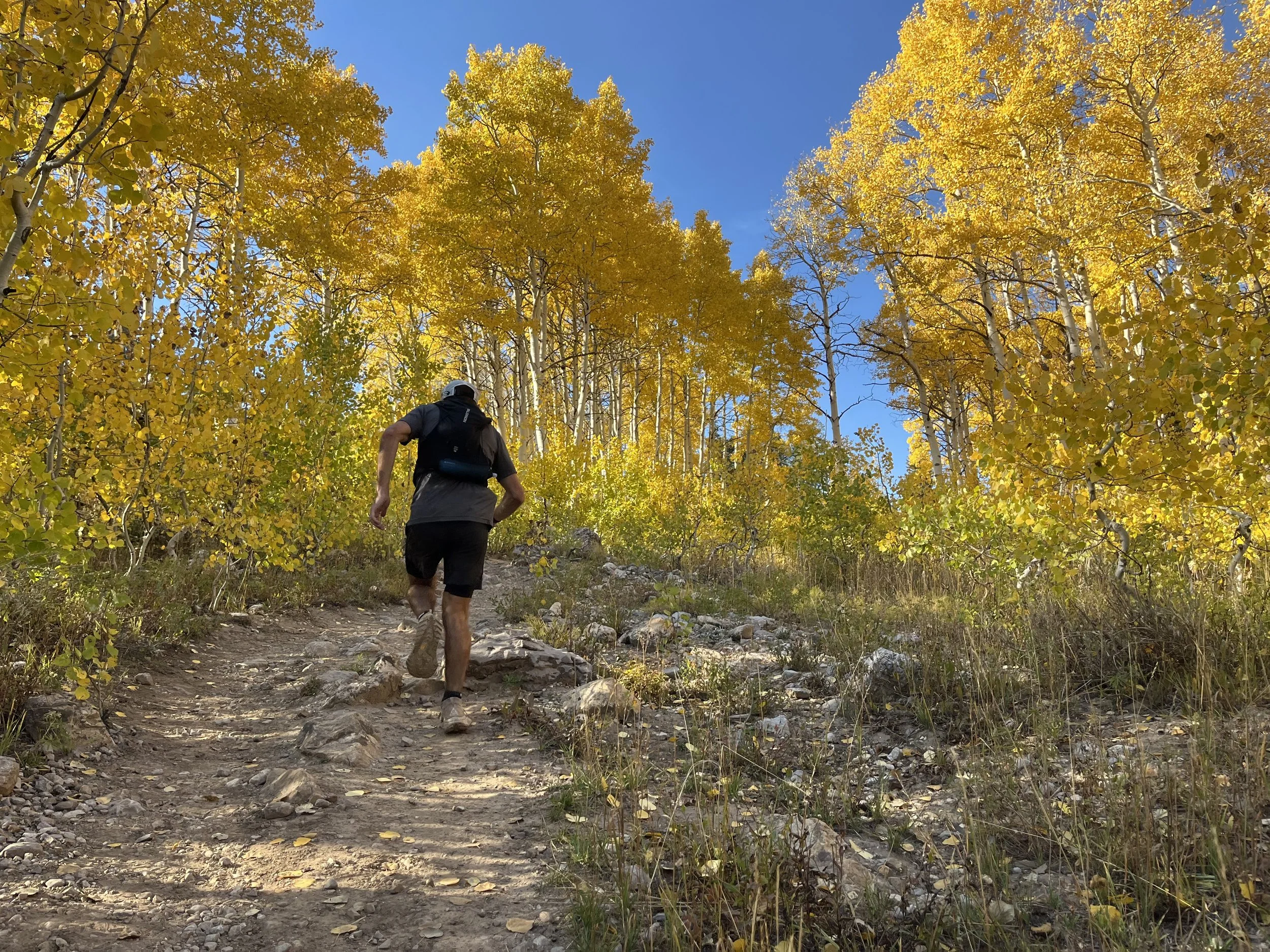
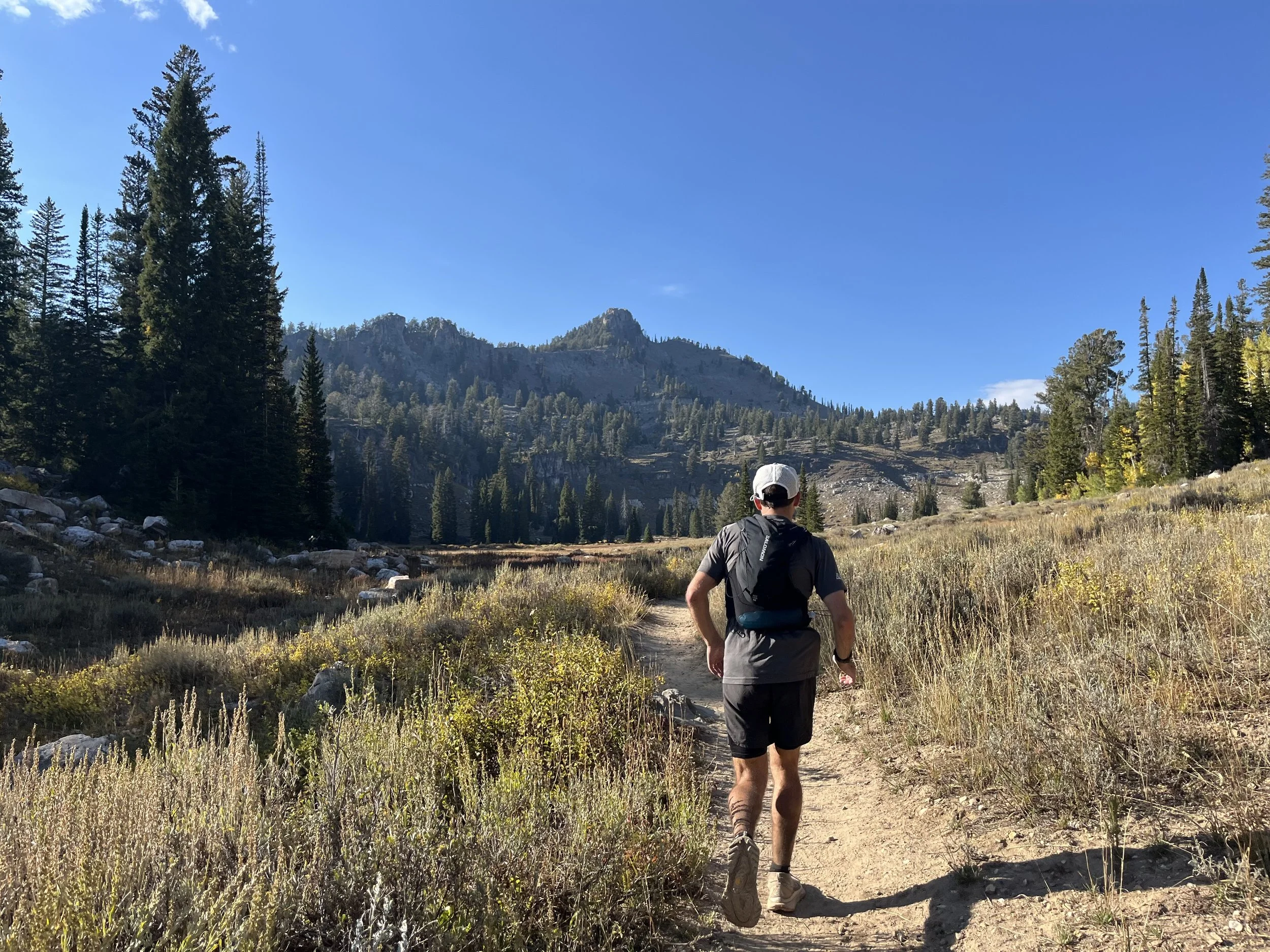
Around mile 65, the nausea started. It stayed with me for the rest of the race.
I still don't know exactly what caused it. I have two theories:
Hydration and sodium. I fell behind on fluids and may have been taking in too much sodium for the amount of water I was drinking.
Carb intake. I pushed my carbs per hour hard, over 70 grams an hour. I tested that in training, but never for more than 10 hours straight.
It was probably some mix of both. Either way, for the last 35 miles of this race I desperately wanted to throw up, and I was afraid to. Throwing up means losing calories, and losing calories that late in a 100 miler is a hole you may not climb out of.
That's the difference between a marathon and a 100. A marathon asks how hard you can push. A 100 asks how well you can troubleshoot while everything slowly breaks.
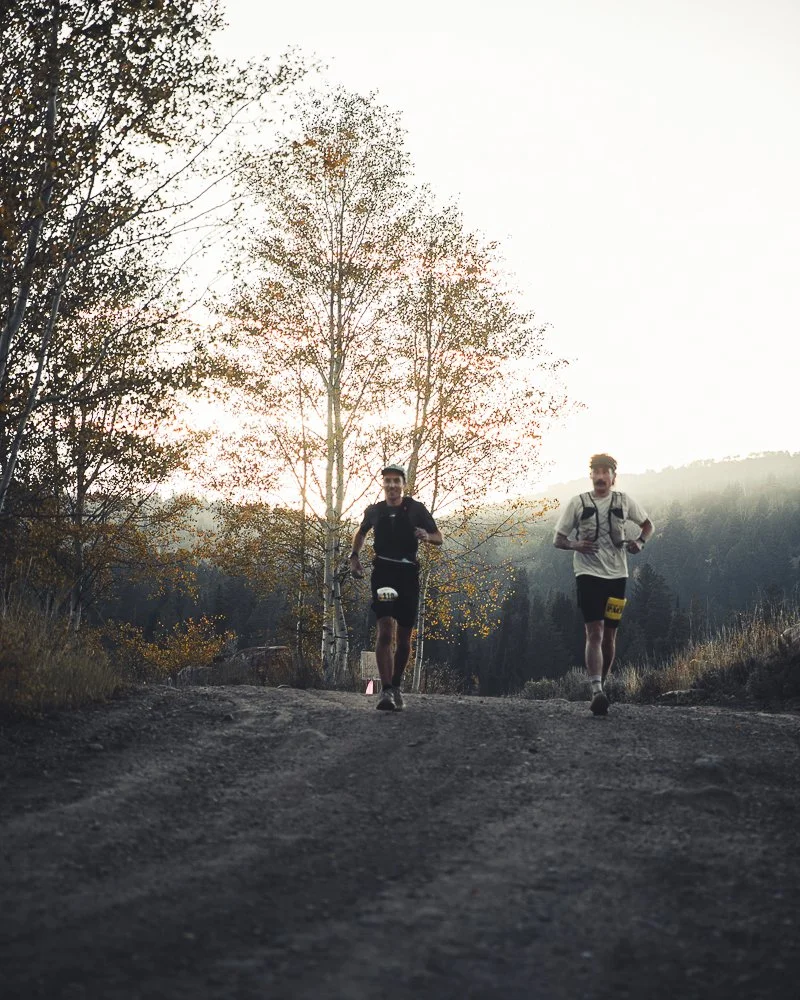
Ben and I coming into Franklin Basin, mile 76. We’re completing a section here where we clicked off a solid 10miles; things were feeling good. We’d leave this aid station and have a very strong 2mile climb towards Beaver Mountain.
Photo Bethany Draper
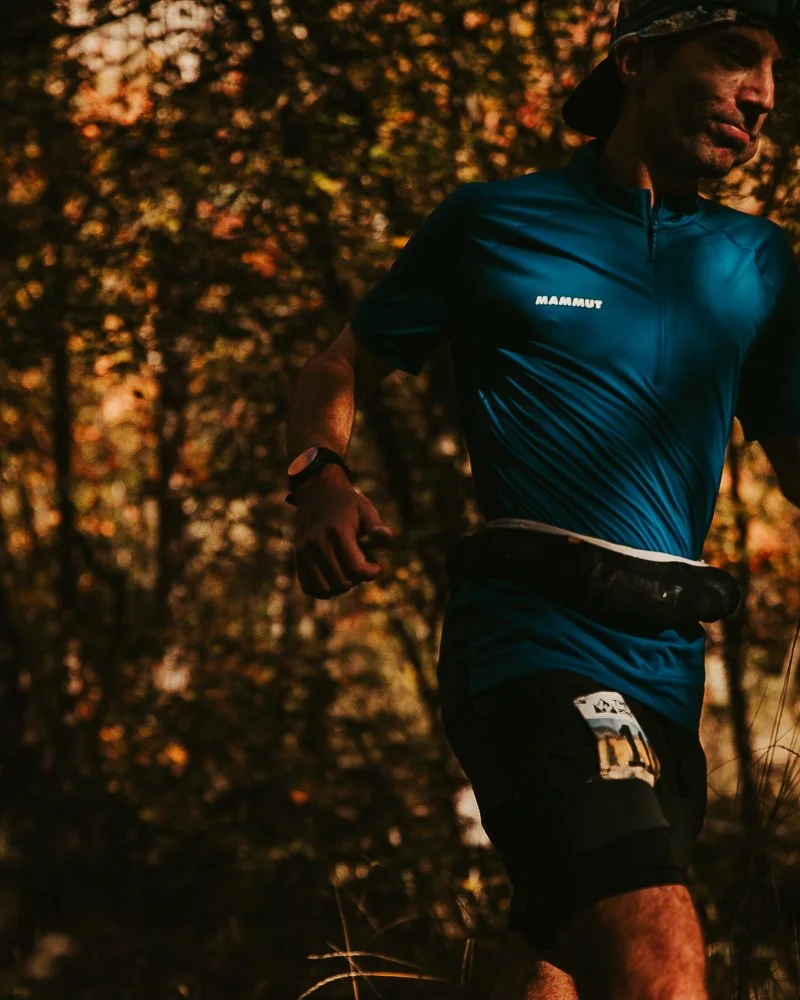
Photo Bethany Draper
Miles 78–100: Find What's Possible
The sun went down. Headlamps were on. We finally felt like the “race” was on, too. Ben and I led a train of runners up to Beaver Mountain, mile 78. This is a 2mile climb that I was familiar with. I decided to push a bit here, perhaps too much.
My brother Matt joined me at Beaver Mountain, mile 78.
My legs still felt strong when I came into that aid station at 78. They were still runnable. My stomach was the problem, and getting worse. By then I couldn't stand the thought of another gel. I switched to cup noodles and potatoes at the aid stations. It was whatever I could keep down.
Matt and I left Beaver and started on the second-to-last climb of the race to Peter Sinks aid station. Peter Sinks is a limestone sinkhole basin known as one of the coldest places in the lower 48. It traps cold air so well that it holds Utah's record low of -69°F. It didn't get anywhere near that cold for us, but at about 35 degrees, dark, and nauseous, it felt cold enough.
The climb is about 1,600 feet and I felt every foot of it. We were with a few other runners at this point, and I decided to tag-along to their pace. This may have cracked me a bit…
and this is where some of the wheels started to come off.
I debated throwing up to relieve my nausea, but knew I needed the calories. I yelled for tums as we entered the aid station. We were in-and-out, trying to keep moving.
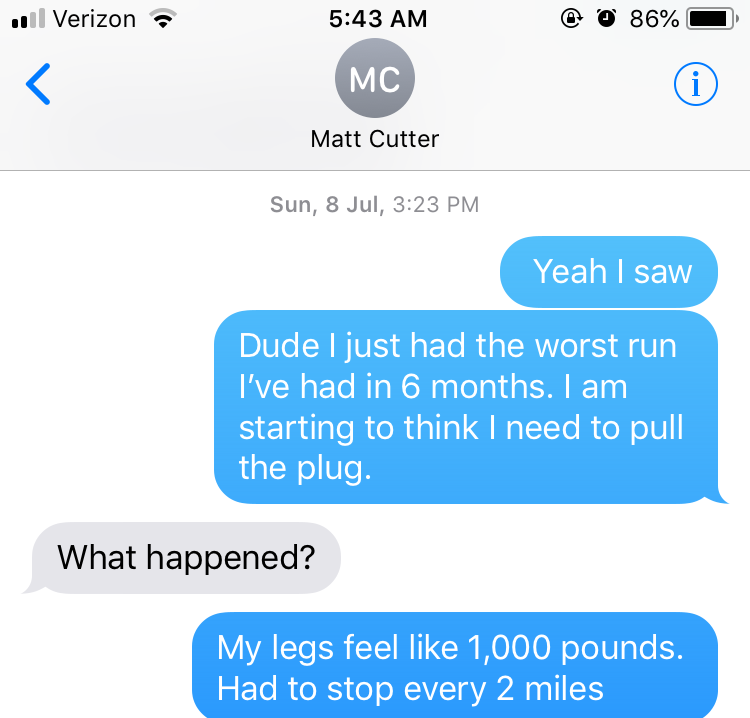
I started walking for a minute. We still had 15 miles to go. I felt incredible merely 5 miles earlier, but now, things were coming apart. I told Matt, "There's just no possible way I can walk the rest of this race." I stopped for a minute & reset.
And that's where the third mantra earned its place. Find What's Possible. Not what I'd planned. Not what I wanted. What was possible right then, with the stomach I had, the legs I had, and the miles left in front of me. I was trying to find out.
I ended up eating about 15 tums over the last 15 miles. Probably not recommended. Oh well. They worked well enough to keep me moving. I switched to exclusively Coca Cola to fuel the final 15miles.
The last climb of the day, we made it. Another 1,000+ feet, took our total gain past 20,000 feet for the day. It almost wrecked me. But, once we crested it, there were eight miles to go, all downhill.
That's when you can smell the finish line.
We pushed. Legs were actually fine. Stomach was somewhat of a disaster. We could see the dark outline of Bear Lake ahead of us beneath the light of a full moon.
All I could think about what how badly I wanted to finish, so then I could throw up.
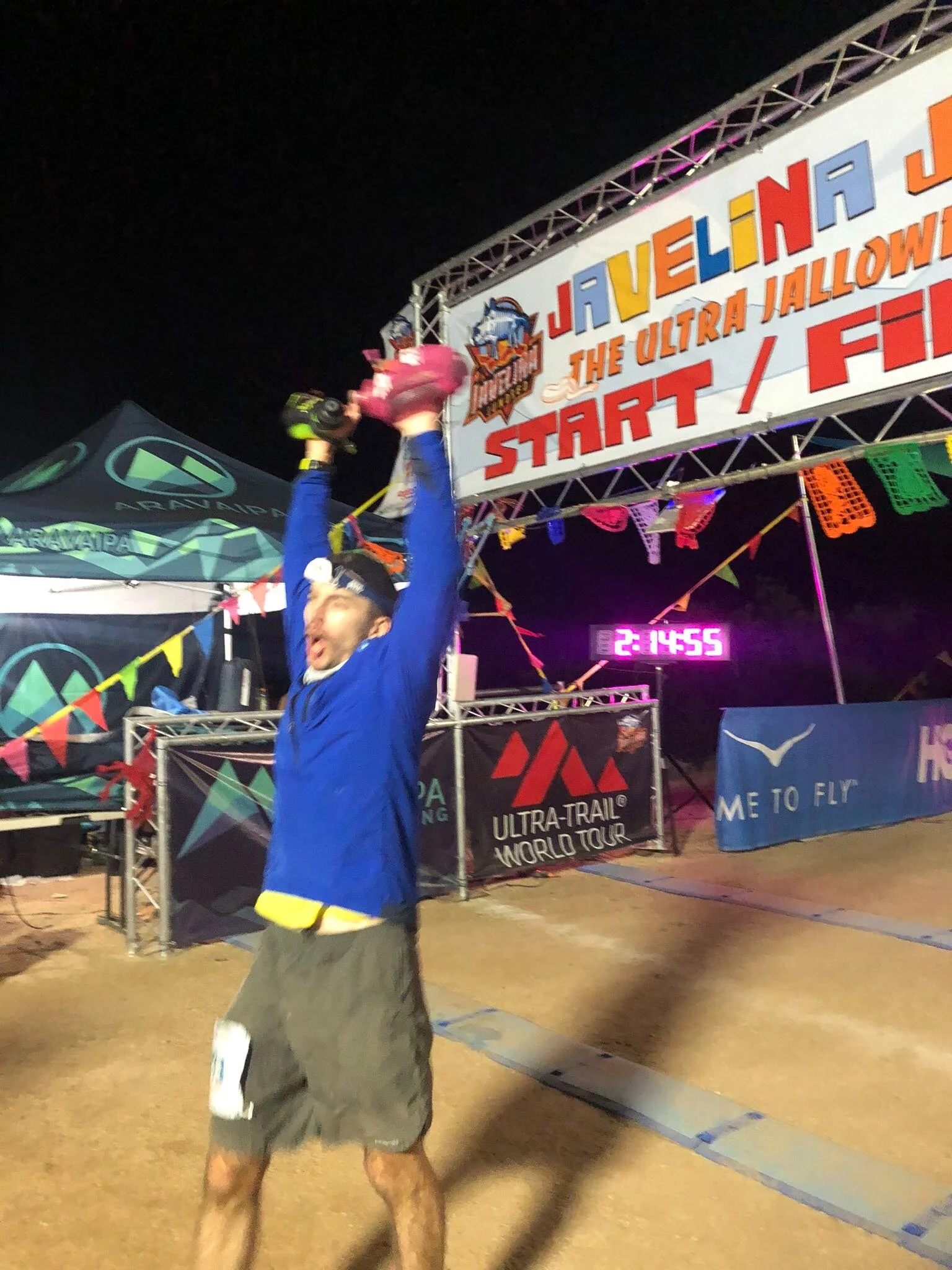
I crossed the finish line — 35 miles worth of sugar, water and coca cola came out of me. We made it!
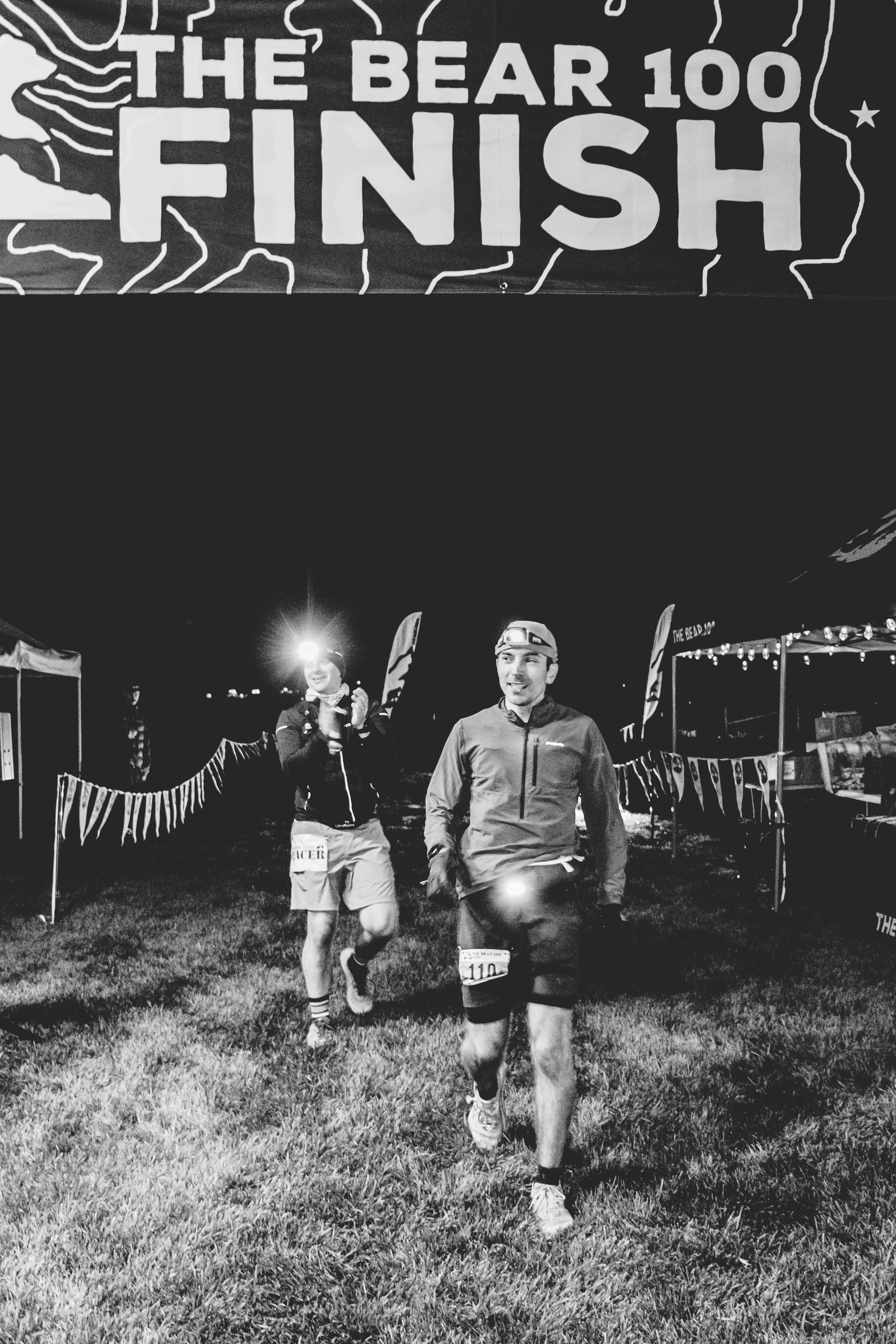
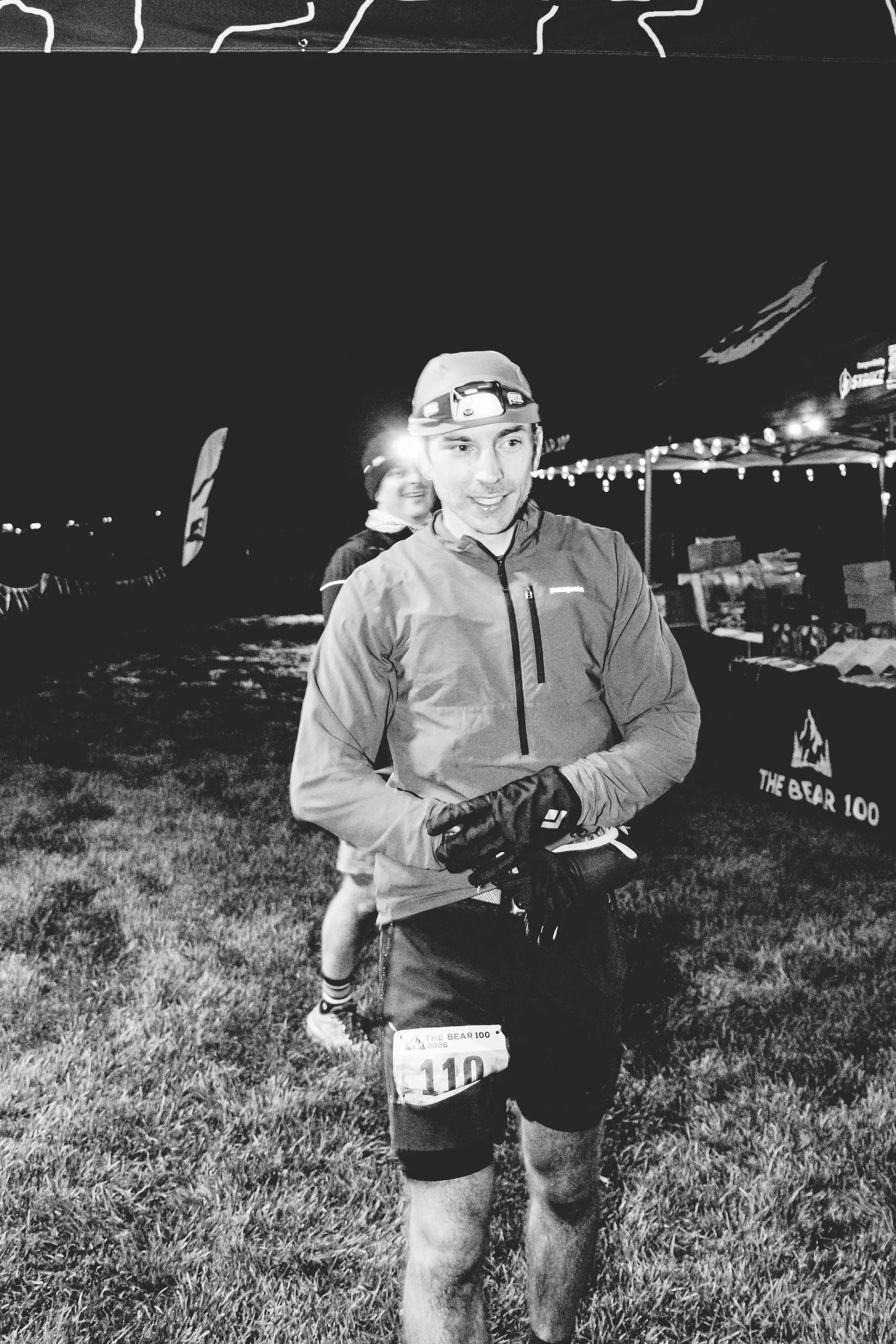
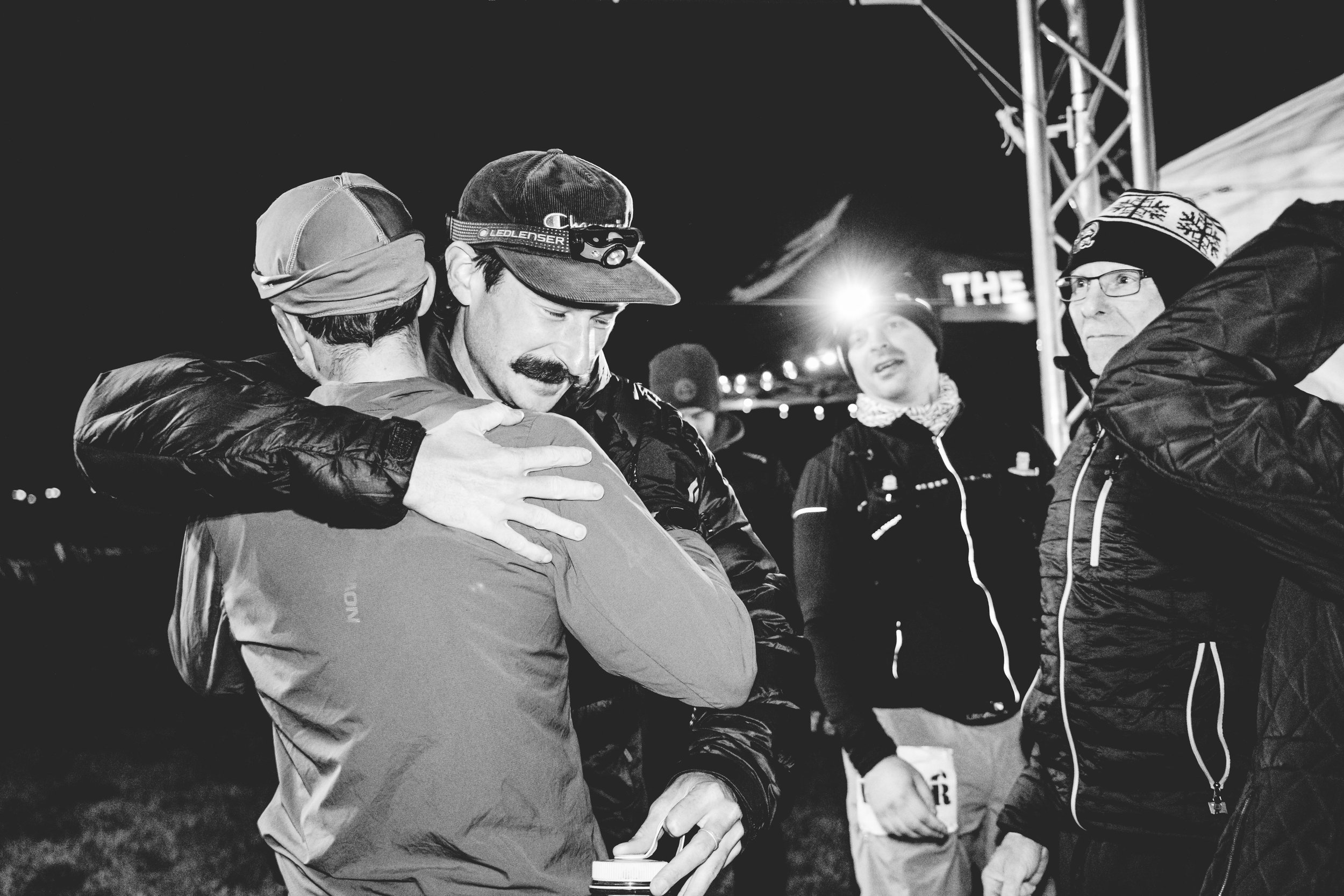
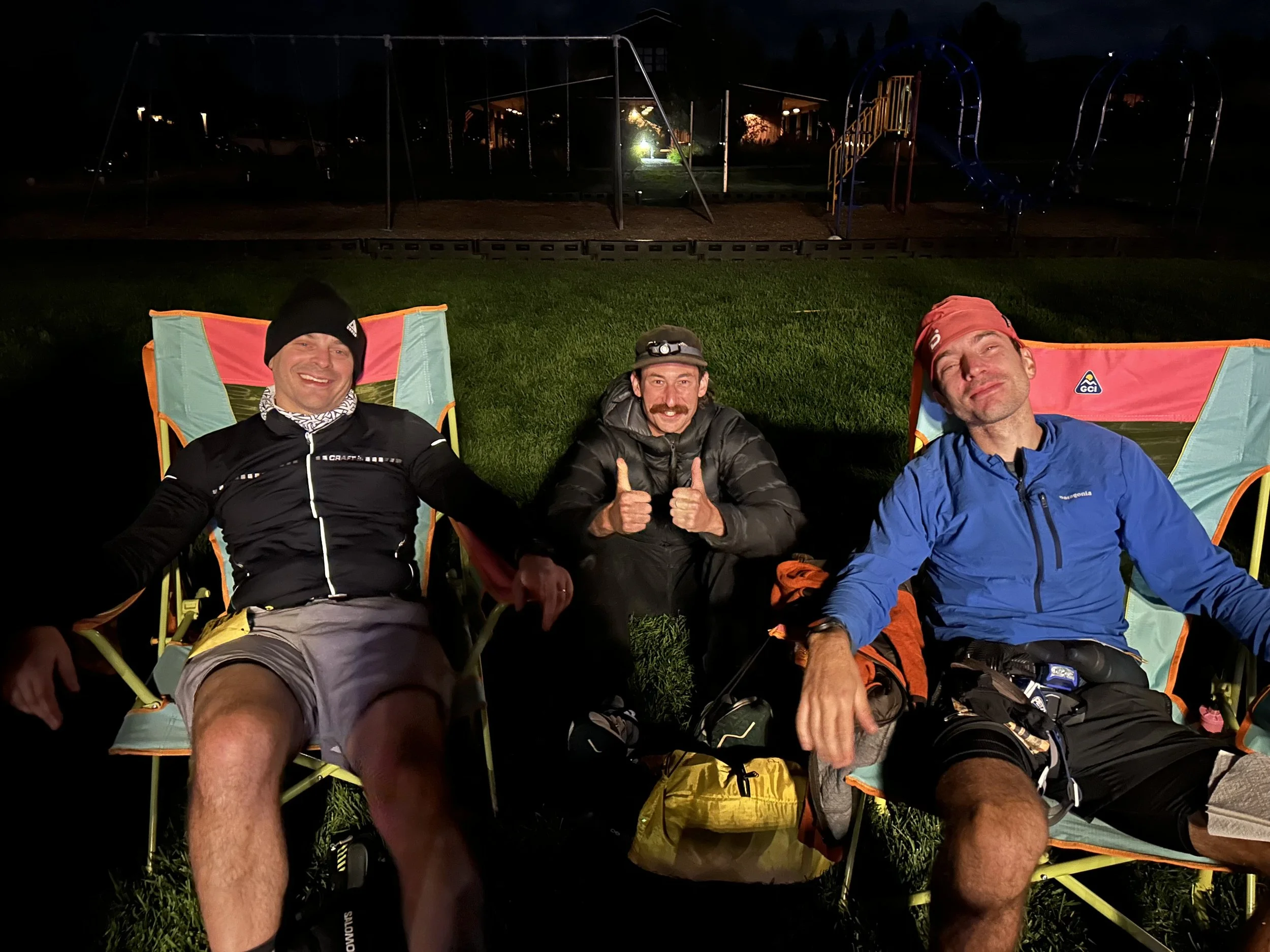
Looking wrecked after relieving my stomach once crossing the finish line
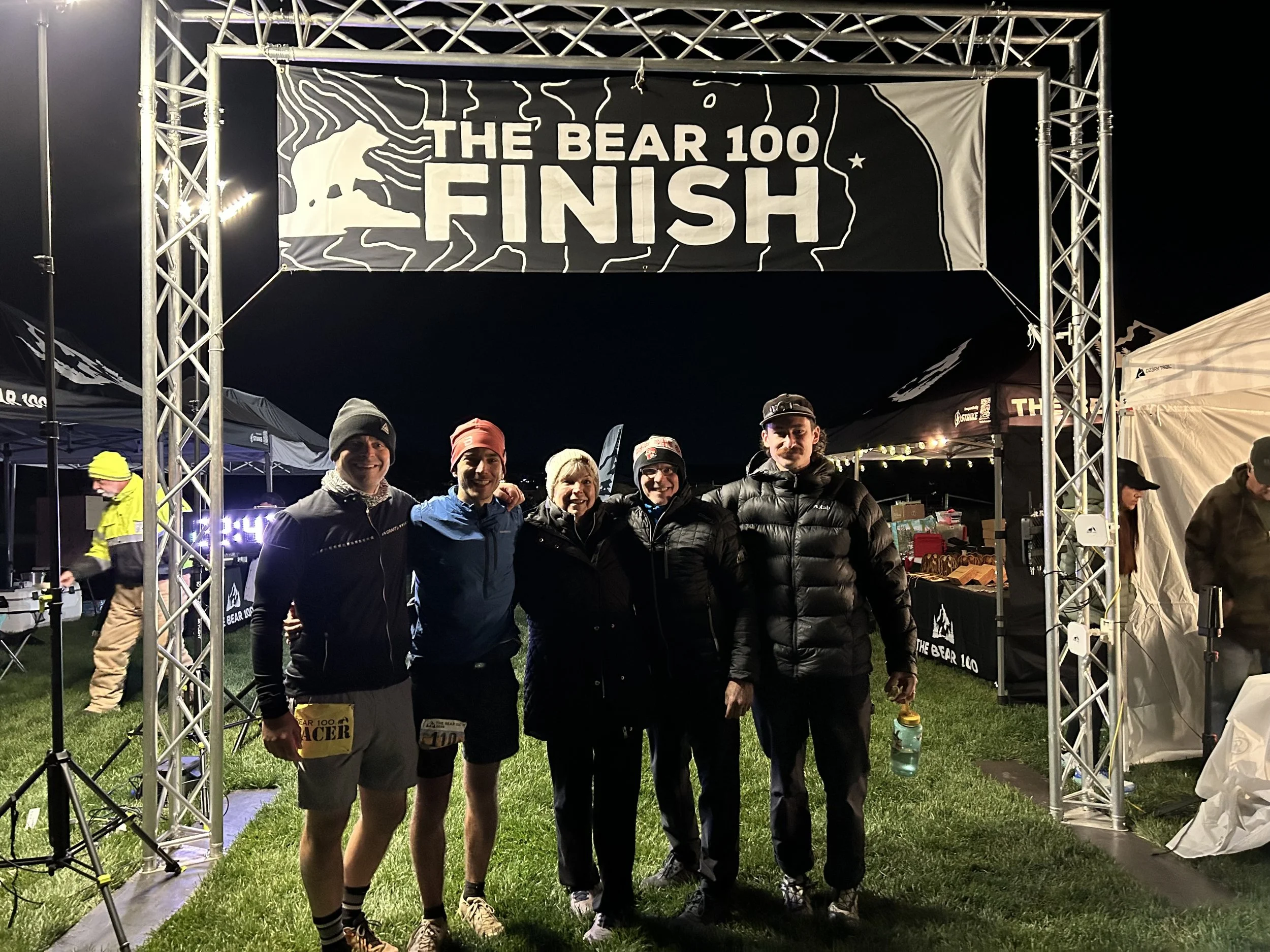
Thanks to the best crew!
The Finish
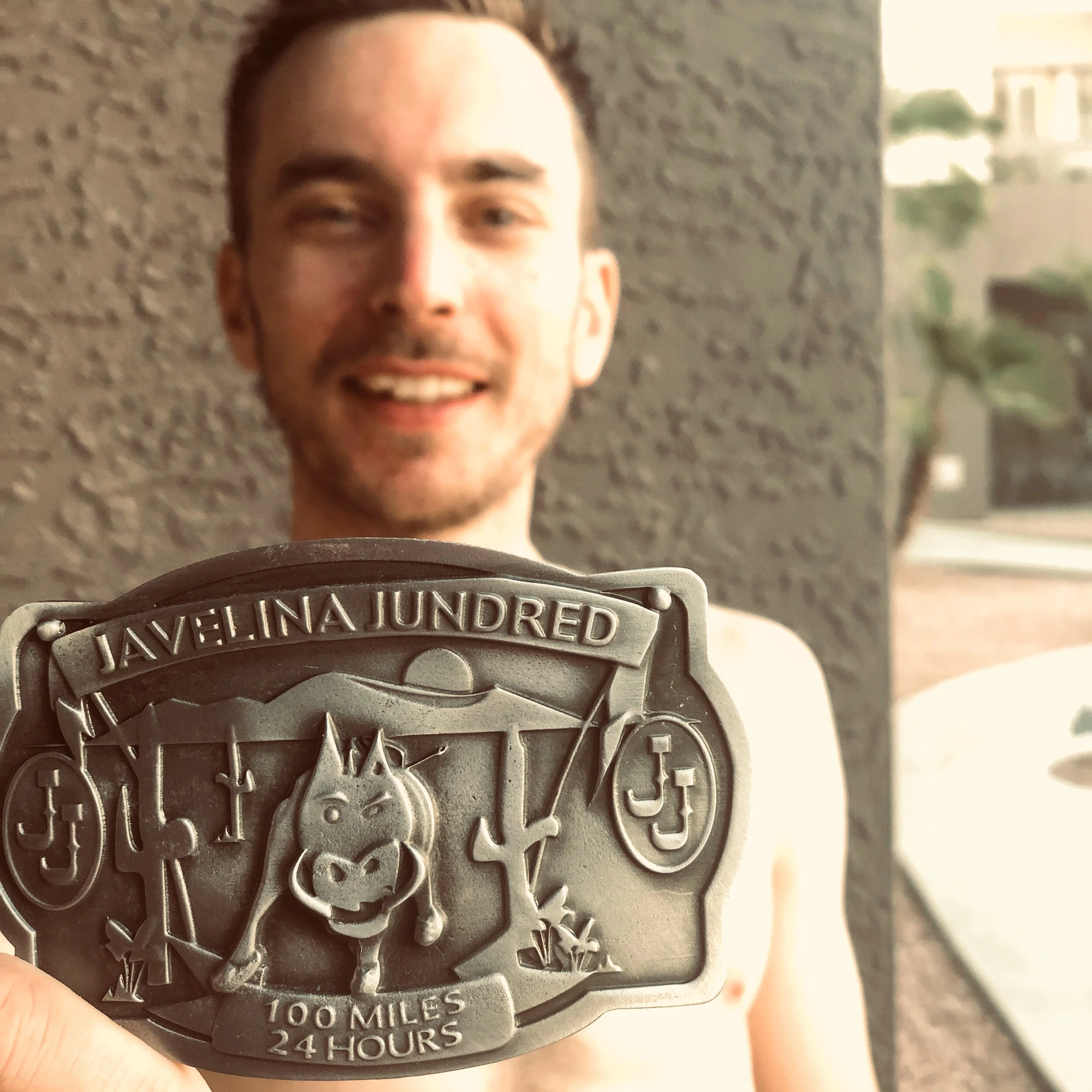
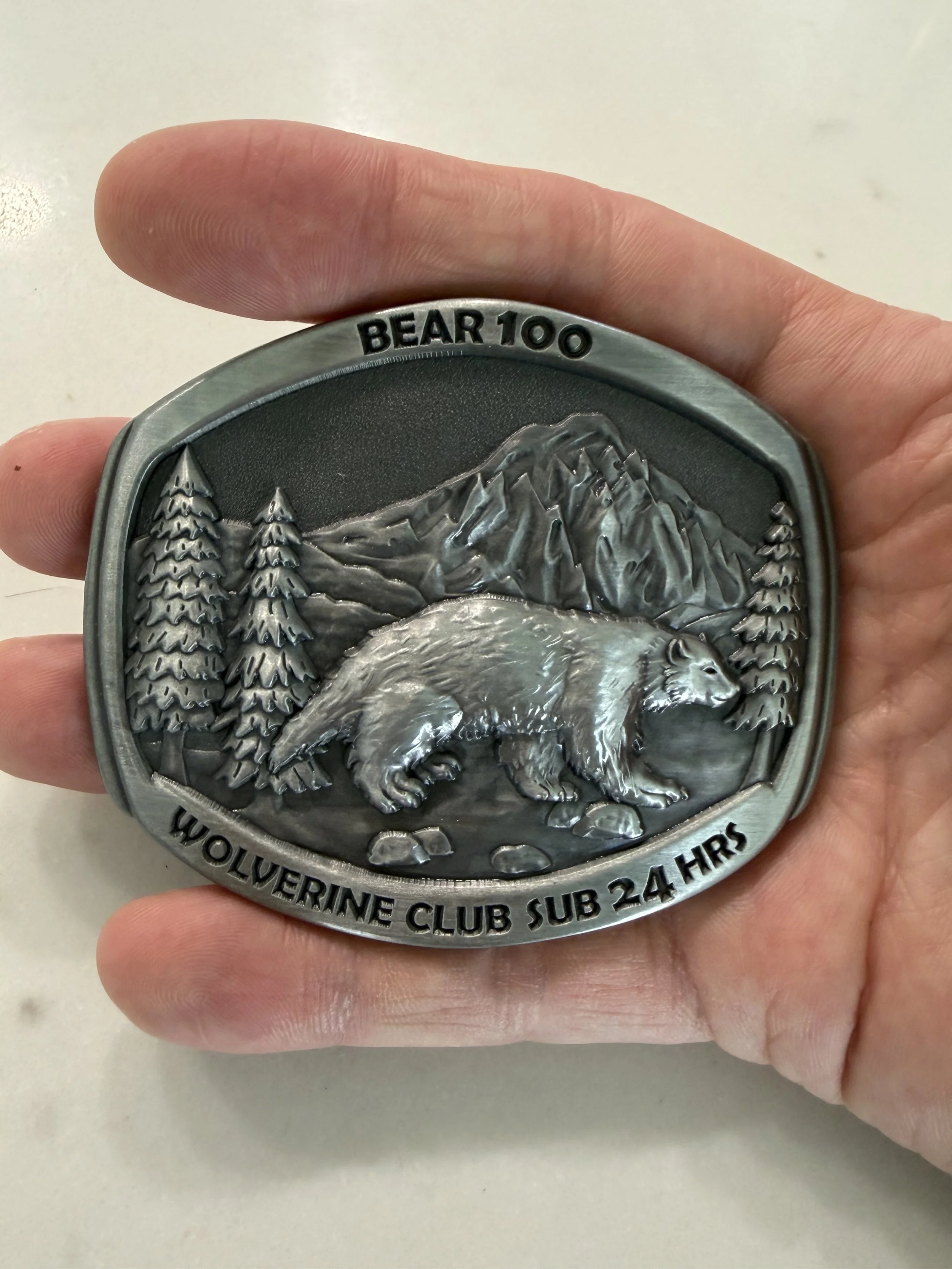
22 hours, 27 minutes. 14th Overall.
My goal was 22:30. I finished three minutes ahead of the splits I had written down months earlier.
Pretty tactical.
I'm really happy with how I executed this one. The pacing, the aid stations, and the patience early all went to plan. If my stomach had cooperated, I think an hour faster was possible. But that's the Bear, and that's the 100-mile distance. Something always doesn’t go to plan. The question is whether you can keep moving anyway.
Gear
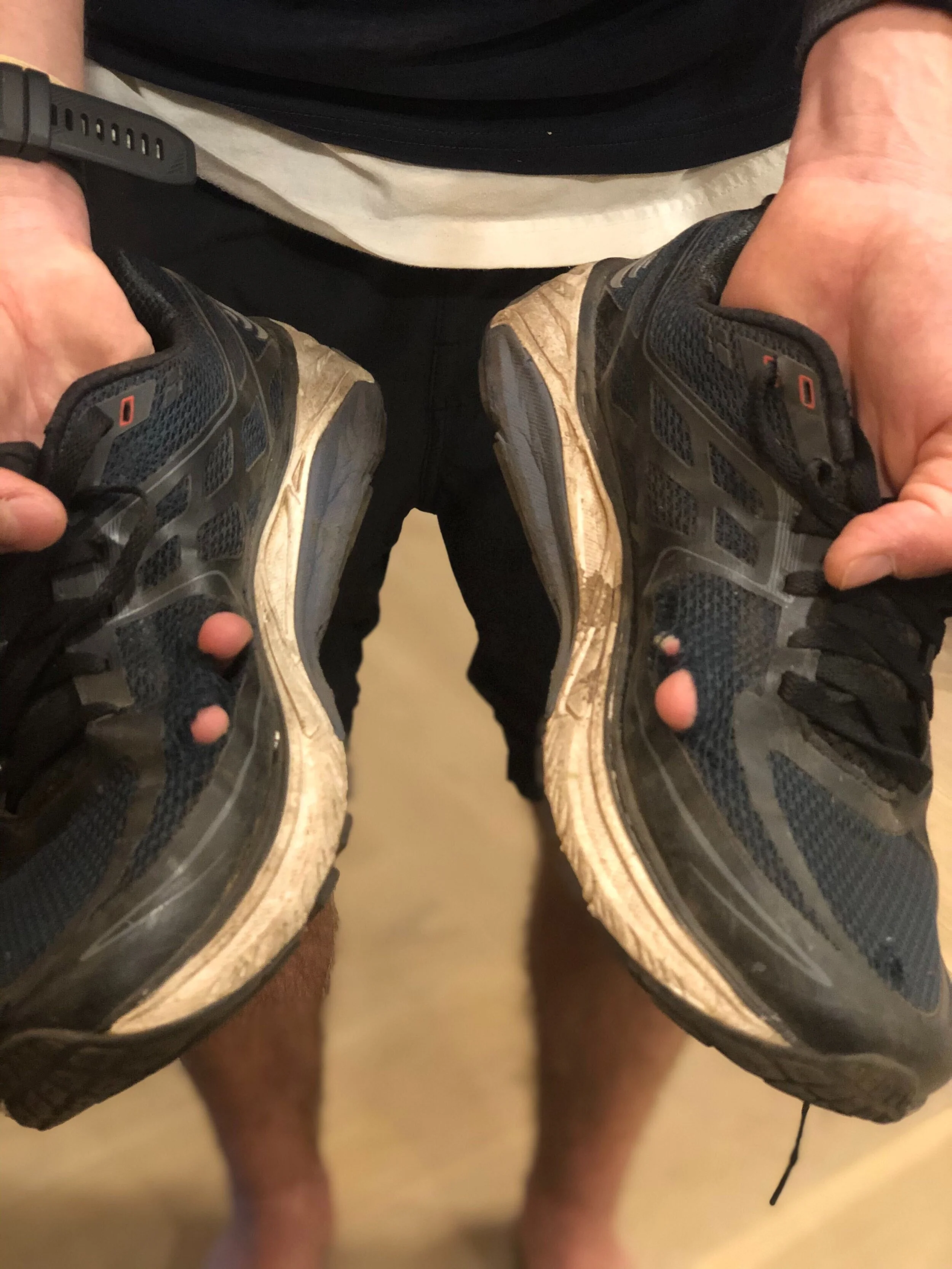
Shoes: Nike ACG Zegama
Watch: COROS APEX Pro
Heart rate: COROS Heart Rate Monitor (armband)
Shirt: Mammut
Belt: Naked Running Band
Pack: Salomon ADV Skin
Headlamps: Various Petzl headlamps
Socks: Injinji toe socks
Post-Race: Two Strange Things
The race was the main event, but two things since the finish have fascinated me.
1. The best recovery I've ever had
As I write this on Wednesday, I just finished a five-mile trail run. Zero soreness. Zero ankle pain.
The ankle that took over my head for three weeks before the race is completely quiet. And I've wanted to run again almost since I crossed the finish line. It feels like an itch my body needs to scratch. I've never recovered from a 100 this fast. I owe this to a great training block.
2. The fog
This one is stranger.
I remember everything from the race itself. Every climb, every aid station, every tums. But the 72 hours after the finish are spotty in memory.
We rented an Airbnb in Garden City to celebrate and rest, and there are whole moments from those days I don't remember at all. Yesterday I called a friend to tell him about the race. He told me I'd already called him about 12 hours after I finished. I didn't believe him. I had to check my phone records. The call was there, but I have no memory of it.The last four days have blurred together. Time passed, but I couldn't put events on a timeline.
From what I've read, this can be fairly common after a long endurance event and a serious lack of sleep, and it's already clearing up as I catch up on rest. But I've never experienced anything like it.
Thank You
No one runs 100 miles alone. Big thank you to my crew (with the nicknames I created):
Lucy ("Sunny"): for putting up with six months of early alarms, long weekends, and me always either running or talking about running. None of this happens without you.
Nancy ("Chief") & Steve ("Weatherman"): A+ crew support. Fast, organized, and always a step ahead of what I needed. A happy crew = a happy runner.
Kylie ("Queen Bee"): happy 2nd birthday. Thanks for spending it cheering on Daddy.
Ben ("Doc"): for 26 strong miles and for returning the favor. Here's to many more adventures.
Matt ("Crystal"): who flew from Boston to beautiful Utah, then paced me entirely in the dark and drove to the airport entirely in the dark. He saw basically none of it. I think it's time for a new nickname: Nightcrawler. 😂

Strava Overview - Linked